

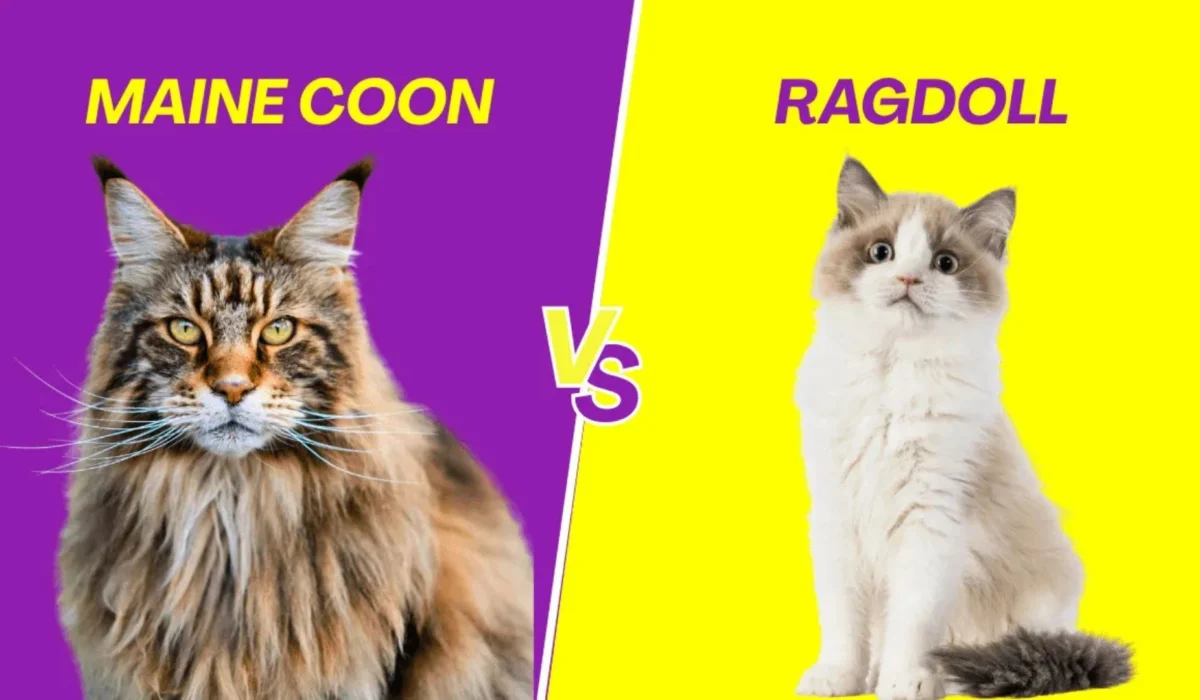
Maine Coon vs Ragdoll : Which Cat Breed Is Right for You?
Trying to decide between a Maine Coon and a Ragdoll can genuinely stump people. Both are big, gorgeous, affectionate cats, and both are hugely popular with families across the U.S. But underneath the surface similarities, they’re pretty different animals literally. Their personalities, grooming demands, energy levels, and the way they actually interact with people don’t line up as neatly as you’d think.
If you’re weighing which breed makes sense for your household, it helps to look past the fluffy exterior. A Maine Coon tends to suit someone who wants an engaged, playful companion who’s genuinely interested in what you’re doing. If you’re considering bringing one home, you can also see our Maine Coon kittens and learn more about what’s currently available. A Ragdoll tends to appeal more to someone who wants a calmer presence, a cat happy to just be near its people without needing constant stimulation.
This guide breaks down the Maine Coon vs. Ragdoll comparison in practical, real-world terms so you can make a decision based on how you actually live, not just which one looks cuter in photos.
The Core Difference Between the Two Breeds
If there’s one main thing separating these two, its personality and how each breed tends to engage with people.
Maine Coons are generally social, sharp, and playful. Many of them like to trail their humans from room to room and get involved in whatever’s happening around the house. They often stay playful well into adulthood, longer than a lot of other breeds.
Ragdolls, by contrast, are typically known for being relaxed and deeply affectionate. Many prefer just being near their owners and lean toward quiet companionship over nonstop activity.
Both can make wonderful pets that part’s not in question. But keep in mind these are breed tendencies, not guarantees. A cat’s individual personality is shaped by genetics, early socialization, environment, and its own particular experiences, so you’ll always get some variation from cat to cat.
Quick Side-by-Side Comparison
| Feature | Maine Coon | Ragdoll |
| Origin | United States | United States |
| Typical personality | Social, curious, playful | Calm, affectionate, relaxed |
| Size | Large | Large |
| Coat | Long and shaggy | Semi-long and silky |
| Grooming | Regular brushing | Regular brushing |
| Activity level | Moderate to high | Moderate |
| Intelligence | High | High |
| Good with families | Often yes | Often yes |
| Good with other pets | Often yes | Often yes |
| Vocalization | Often soft and varied | Generally gentle |
| Indoor suitability | Yes, with enrichment | Yes, with enrichment |
Again tendencies, not guarantees. Every individual cat brings its own personality to the table.
Size: Which Breed Actually Gets Bigger?
Both breeds land firmly in “large cat” territory, but Maine Coons tend to get the edge here, especially when it comes to overall body length and frame size.
Maine Coons often have long bodies, oversized paws, and dramatic, full tails. Their shaggy coats also add to the illusion of even greater size.
Ragdolls aren’t small by any stretch either they’re large and muscular, often with a broad chest and substantial build. Their semi-long, silky coat gives them a soft, plush look that reads a little differently than a Maine Coon’s shag.
One thing worth keeping in mind: don’t pick a kitten based purely on projected adult weight. Healthy adult size actually varies quite a bit between individual cats, even within the same breed.
The more useful question to ask yourself is really this: can your home comfortably handle a large cat?
Worth thinking through:
- A sturdy, appropriately sized cat tree
- Litter boxes big enough for a growing cat
- Roomy sleeping spots
- Scratching posts that can handle real weight
- A carrier sized for an adult cat, not just a kitten
- Toys that can hold up to bigger paws
- Food and water stations that are comfortable for a large-bodied cat
And regardless of breed, good nutrition and consistent vet care matter a lot more than chasing maximum size.
Personality: Maine Coon vs. Ragdoll
This is usually where the decision actually gets made.
What a Maine Coon Is Typically Like
Maine Coons tend to come across as friendly, curious, and genuinely interactive. A lot of them enjoy being around their people without necessarily demanding to be held or cuddled constantly.
Every cat is an individual, so getting to know the parents and adult cats in a breeding program can also give prospective owners useful context. You can meet our Maine Coon cats to learn more about the cats behind our breeding program.
In a typical day, you might catch a Maine Coon:
- Trailing you from room to room
- Watching whatever task you’re doing with real interest
- Playing with toys on their own initiative
- Investigating anything new that shows up in the house
- Parked nearby while you’re working
- Actively engaging with different family members
People often call them “gentle giants” because of that generally warm, easygoing nature. That said, not every Maine Coon wants to be a lap cat; plenty of them would rather sit beside you than on top of you, which is worth knowing going in.
What a Ragdoll Is Typically Like
Ragdolls are usually described as calm and affectionate above almost anything else. Many genuinely enjoy staying close to their owners and tend to settle well into a quieter household rhythm.
A Ragdoll often gravitates toward:
- Relaxing right beside you
- Gentle, low-key play
- Being folded into everyday family routines
- Cozy indoor spaces
- Calm, unhurried attention from their people
The breed’s reputation for a laid-back temperament is pretty well earned.
Still, “Ragdoll” shouldn’t be treated as a guaranteed personality type. A responsible breeder focuses on healthy breeding and solid early socialization not on promising that every single kitten will behave identically, because that’s just not realistic.
Grooming Needs: What to Actually Expect
Neither of these breeds is the low-maintenance, wash-and-go type. Both need regular grooming the real difference comes down to coat texture and how you approach the routine.
Grooming a Maine Coon
Maine Coon coats are long and shaggy, and some cats develop a genuinely impressive ruff around the neck along with longer hair on the body and tail.
Regular brushing helps:
- Clear out loose hair before it becomes a problem
- Cut down on tangles
- Keep the coat looking clean and healthy
- Give you a chance to notice any skin issues early
- Reduce the amount of fur drifting around your house
A few short brushing sessions spread across the week is a lot easier than letting the coat get away from you and dealing with matting later.
Grooming a Ragdoll
Ragdolls have a semi-long coat that’s usually silky and soft to the touch. It can still tangle, though, if grooming gets neglected for too long.
A consistent brushing routine keeps things in good shape.
Whichever breed you go with, start grooming early while your cat is still a kitten. Keep sessions short at first and reward calm behavior; it makes a huge difference down the road.
Which Breed Is More Active?
If you’re hoping for a cat that’s genuinely into interactive play and exploring its surroundings, a Maine Coon is probably going to be more your speed.
Maine Coons tend to enjoy climbing, chasing toys, and investigating basically everything within reach. They do best with real environmental enrichment; they’re not the type to be satisfied sitting in a sunbeam all day.
Ragdolls aren’t lazy by any means, and they can absolutely enjoy playing too. But as a general pattern, they lean toward a calmer overall style than Maine Coons do.
Either way, indoor enrichment matters. Worth having on hand:
- Puzzle feeders
- Interactive toys
- Scratching posts
- A cat tree or two
- Window perches for people-watching
- A rotating toy stash to keep things interesting
- Actual daily play sessions, not just toys left lying around
A large cat that’s understimulated can get bored fast, no matter which breed you’re talking about.
Which Is Better With Kids?
Both breeds can genuinely thrive in family homes but that depends a lot on individual temperament and how introductions are handled.
The real key is teaching kids how to interact with a cat respectfully. That means kids need to learn:
- Never to pull a cat’s tail
- Not to chase the cat around
- To let the cat walk away when it wants to
- How to handle a cat gently, not roughly
- To recognize when the cat wants space
- Not to bother a cat while it’s eating or sleeping
A calm adult should be supervising when young kids and cats are together, at least until everyone’s comfortable.
The same logic applies if you already have dogs or other cats at home. Slow, gradual introductions beat forcing animals together every time.
Health Considerations Worth Knowing
Health should factor into your decision no matter which breed you land on.
Maine Coons carry a few inherited health concerns worth discussing openly with breeders and vets. Hypertrophic cardiomyopathy (HCM) is a particularly important one; it’s a common heart disease in cats generally, and it can have inherited forms in this breed specifically.
Ragdolls have their own breed-specific genetic considerations too, and HCM is relevant here as well.
This is exactly why responsible breeding matters so much. When you’re talking to a breeder, it’s worth asking. Registration can also be an important part of understanding a kitten’s pedigree and background. Learn more about TICA-registered Maine Coon kittens and cats and what registration means for prospective owners.
- What health testing has been done on the parents?
- Can I actually see veterinary records?
- What vaccinations will the kitten have had?
- What does the health guarantee cover?
- Is there a written purchase contract?
- How are the kittens socialized?
- What support is available once I bring the kitten home?
The University of Missouri’s Veterinary Medical Diagnostic Laboratory, along with other veterinary genetics resources, has documented approaches to genetic testing for feline HCM mutations. That kind of testing is genuinely useful, but it’s worth understanding it as one piece of a broader health picture, not a complete guarantee that a cat will stay disease-free.
Once you bring your kitten home, your vet can help map out an appropriate preventive care schedule going forward.
What Does a Maine Coon or Ragdoll Actually Cost?
There’s no single nationwide price tag for either breed costs shift depending on a lot of variables:
- Breeder experience
- Pedigree
- Where you’re located
- Registration status
- Health testing performed
- Veterinary care included
- Vaccination history
- Early socialization
- The specific breeding program
- Whether it’s show quality or pet quality
- Transportation, if relevant
A rock-bottom advertised price shouldn’t automatically read as a great deal. Instead, look at what’s actually included in that price.
One kitten might have a lower sticker price but come with additional vet bills, vaccinations, or other costs down the road. Another might cost more upfront specifically because the breeder has already invested heavily in veterinary care, health testing, and early socialization.
Ask for a full breakdown of exactly what’s included before you commit to anything.
Making the Actual Choice
Instead of asking which breed is objectively “better,” a more useful question is: which one actually fits how you live?
A Maine Coon might be the right call if you want:
- A large, genuinely interactive companion
- A playful, endlessly curious cat
- An affectionate personality that’s still fairly independent
- A cat that likes being part of whatever’s happening in the house
- A long-haired breed with a striking, distinctive look
A Ragdoll might be the better fit if you want:
- A generally calm, easygoing companion
- A cat known for its affectionate nature
- A relaxed, low-key indoor lifestyle
- A semi-long-haired breed that’s a bit easier to manage
- A cat content with quiet, steady companionship
Of course, these are patterns and tendencies not promises carved in stone.
What to Ask a Maine Coon Breeder?
If you’ve landed on a Maine Coon as the right fit, picking the right breeder matters just as much as picking the breed itself.
Look for genuine transparency. A responsible breeder should be entirely comfortable talking through their cats, breeding practices, veterinary care, and how kittens are raised day to day.
It can also be useful to understand how a breeder’s litters are planned and raised over time. You can learn more about our Maine Coon litters as part of your research.
Worth asking for:
- Health information on both parents
- Veterinary records
- Vaccination details
- Genetic testing information
- A written contract
- Specifics on the health guarantee
- How kittens are socialized before going home
- When kittens are actually ready to leave
- What kind of support is available if you need help after adoption
At Bella Dolce Maine Coons, prospective families can look into available kittens, our cats, current litters, and the purchase and delivery process before making any decisions. That kind of openness matters, because choosing a kitten should genuinely be about more than how it looks in a photo.
If you’re considering a Maine Coon from a breeder in Washington State, take the time to go through the kitten information carefully and ask your questions before committing to anything.
Which One Is Actually Right for You?
There’s no universal winner in the Maine Coon vs. Ragdoll debate, it really comes down to what you’re looking for.
A Maine Coon tends to be the stronger fit if you want a large, playful, curious cat that genuinely enjoys being part of the household action.
A Ragdoll tends to suit people who’d rather have a calmer, more relaxed companion around.
Your home environment plays into this too. Think about your schedule, whether you have kids, other pets already in the house, the space you’ve got available, and honestly, whether you’re up for maintaining a long-haired coat long-term.
Most important of all: don’t pick a kitten based purely on color, size, or a cute photo. Take the time to actually learn about the breeder, and about the kitten’s health, temperament, and early socialization.
Final Thoughts
At the end of the day, choosing between a Maine Coon and a Ragdoll comes down to the kind of companion you actually want and the lifestyle you can realistically offer.
Maine Coons tend to be a great match for families wanting a large, social, playful cat that’s genuinely engaged with the household. Ragdolls tend to shine for people who’d rather have a calmer, deeply affectionate companion around.
Whichever breed you land on, prioritize responsible breeding, solid health care, real socialization, and long-term support from wherever you’re getting your kitten. Ask the hard questions, review the health information, and make sure the breeder is genuinely transparent about their cats and kittens, not just their marketing.
If a Maine Coon ends up being the right fit for your lifestyle, take your time finding a responsible breeder and getting to know the kittens that are available. For families in Washington State considering a Maine Coon, Bella Dolce Maine Coons offers information on its cats, kittens, current litters, and the purchase process everything you need to make a genuinely informed decision.
Frequently Asked Questions
Are Maine Coons bigger than Ragdolls?
Generally, yes Maine Coons tend to be the larger of the two breeds, particularly in overall body length and frame. That said, individual cats vary quite a bit, and both breeds can get genuinely large.
Which breed is more affectionate: Maine Coon or Ragdoll?
Both can be plenty affectionate, just in different ways. Maine Coons often show affection through active interaction and companionship, while Ragdolls tend to express it through relaxed, people-oriented closeness. Individual temperament plays a big role either way.
Are Maine Coons more active than Ragdolls?
As a general pattern, yes Maine Coons tend to be more curious and playful day to day. Ragdolls can enjoy play too, but they’re usually described as the calmer of the two. Both breeds still need daily interaction and enrichment regardless.
Which breed is easier to groom?
Neither one is truly low-maintenance in this department. Both need regular brushing. Maine Coon coats run long and shaggy, while Ragdolls have a silkier semi-long coat.
Is a Maine Coon a good family cat?
Generally yes, especially when properly socialized and when kids are taught how to interact with cats respectfully. The individual kitten’s temperament still matters a lot here too.
Also Read: Reputable Maine Coon Breeder in the USA