
Best Non Toxic Flowers for Cats :10 Cat Friendly Flowers
Flowers can make a home feel brighter and more welcoming. But when you live with a curious cat, choosing the right bouquet takes more thought. Cats love to sniff, paw at, rub against, and sometimes chew plants. That means a flower that looks harmless to you may not be safe for your pet.
The good news is that there are many best non toxic flowers for cats that can add color to your home without the serious poisoning risks associated with certain plants.
The ASPCA maintains a database of plants classified as toxic or non-toxic to cats. It also warns that even plants considered non-toxic can cause mild stomach upset if eaten.
For cat owners, the goal is not simply to find pretty flowers. It is to choose flowers that are identified correctly, keep them free from harmful chemicals, and understand which common varieties should never enter a cat-friendly home.
What are the best non toxic flowers for cats?
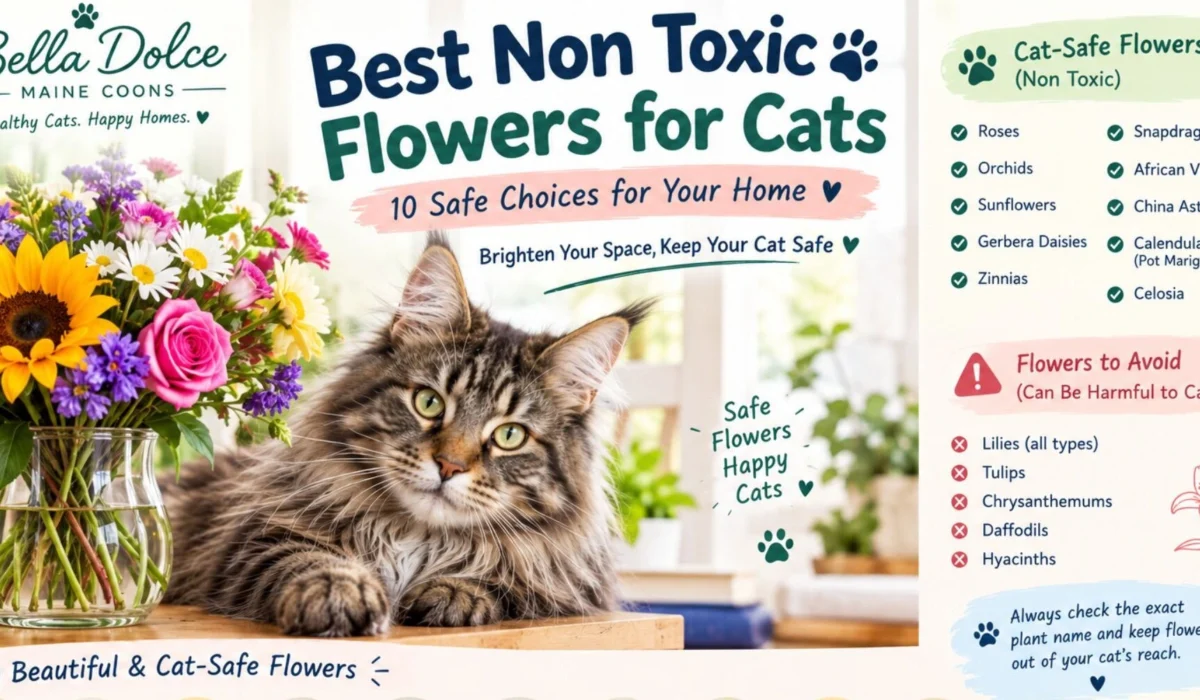
Some of the most useful choices for cat owners include:
- Roses
- Orchids
- Sunflowers
- Gerbera daisies
- Zinnias
- Snapdragons
- African violets
- China asters
- Calendula or pot marigold
- Celosia
These flowers are listed by the ASPCA as non-toxic to cats. However, “non-toxic” does not mean your cat should eat the plant. Any plant material can potentially cause gastrointestinal upset. The safest approach is still to discourage chewing and supervise curious cats around bouquets and houseplants.
1. Roses
Roses are one of the easiest choices for cat owners who want traditional cut flowers. The ASPCA lists Rosa species as non-toxic to cats.
Roses work well in bouquets and can add a classic look without the toxicity concern associated with true lilies. There is one practical issue: thorns.
A rose may be non-toxic but still cause a physical injury if your cat paws at the stem or jumps into a vase. Remove loose leaves and sharp thorns where practical, and place the vase somewhere stable.
Also pay attention to what comes with the bouquet. Flower preservatives, pesticides, fertilizers, and decorative greenery can create a different safety issue from the rose itself.
2. Orchids
Orchids are another attractive option for cat-friendly homes. The ASPCA lists several orchid varieties as non-toxic to cats, including Phalaenopsis orchids, commonly called moth orchids.
They are especially useful for people who like flowering indoor plants rather than traditional cut bouquets. A healthy orchid can also provide long-lasting color compared with many short-lived cut flowers.
Still, identify the exact plant before bringing it home. Common names can be confusing. When choosing flowers that are cat friendly, checking the scientific name is a useful habit.
3. Sunflowers
Sunflowers offer a bright and cheerful option for a cat-friendly household. The ASPCA lists sunflowers, specifically Helianthus angustifolius in its database, as non-toxic to cats.
Their large blooms can make a room feel lively and work well in seasonal arrangements. Because sunflowers can be tall and top-heavy, use a sturdy vase. A lightweight vase that tips easily is not ideal when you have an active cat that likes climbing or investigating new objects.
4. Gerbera Daisies
Gerbera daisies are colorful and widely available in bouquets. The ASPCA identifies Gerbera jamesonii, commonly called the Gerbera or Barberton daisy, as non-toxic to cats.
They come in a wide range of bright colors and can be a practical alternative when you want a cheerful bouquet without choosing flowers known to be dangerous to cats.
Because cats can still experience digestive upset after eating plant material, keeping the arrangement out of reach is still the better approach.
5. Zinnias
Zinnias are another excellent option for people searching for non-poisonous flowers for cats. The ASPCA lists Zinnia species as non-toxic to cats.
They are popular garden flowers and are available in many colors. For homes with indoor cats, they can also bring a little outdoor color inside during the growing season.
Before bringing garden flowers indoors, make sure they have not been treated with pesticides or other products that could be harmful if a cat licks or chews the plant.
6. Snapdragons
Snapdragons have a distinctive shape and are often used in both gardens and floral arrangements. The ASPCA lists common garden snapdragon, Antirrhinum majus, as non-toxic to cats. They can be a nice choice when you want height and visual interest in a bouquet.
As with any cut flower, remove fallen petals and leaves regularly. This reduces the temptation for a cat to investigate and chew the plant material.
7. African Violets
For a smaller indoor flowering plant, African violets are worth considering. The ASPCA lists Saintpaulia species as non-toxic to cats. Their compact size can make them easier to keep on a high shelf or another location that is less accessible to a curious cat.
This can be especially useful for homes with playful kittens that turn almost every new object into a toy.
8. China Asters
China asters are colorful flowering plants that are also included on the ASPCA’s non-toxic list for cats. The scientific name is Callistephus chinensis.
They can work well in gardens and seasonal floral arrangements. As always, correct plant identification matters. A similar-looking flower may belong to an entirely different species with a different safety profile.
9. Calendula or Pot Marigold
Calendula, also called garden marigold or pot marigold, is listed by the ASPCA as non-toxic to cats. Its scientific name is Calendula officinalis.
This is a good example of why common names matter. “Marigold” can refer to different plants, so do not rely only on the label at a garden center. Check the scientific name before making a purchase.
10. Celosia
Celosia can add an unusual texture and shape to a flower arrangement. The ASPCA lists varieties such as Celosia globosa, Celosia spicata, and Celosia plumosa as non-toxic to cats.
It can be a good choice for cat owners who want something less traditional than roses or daisies.
Flowers that are cat friendly still need safe handling
Choosing flowers that are cat safe is only one part of the process. A bouquet can contain several different plants. One harmless-looking centerpiece may include a toxic flower or decorative greenery that puts your cat at risk.
When buying a bouquet, ask the florist exactly what is included. It is also smart to check:
- The common name
- The scientific name
- Any greenery included
- Floral preservatives
- Pesticide or chemical treatments
- Whether the vase water contains additives
- Whether your cat can reach the arrangement
This matters because a cat may chew a leaf even when it ignores the flower itself.
Flowers harmful to cats: What should you avoid?
The biggest flower-related warning for cat owners is lilies. True lilies from the Lilium genus and daylilies from Hemerocallis can be extremely dangerous to cats.
The FDA states that the flowers, leaves, stems, pollen, and even vase water from these lilies can cause severe kidney damage. Small exposures can become life-threatening.
Reported early signs can include vomiting, drooling, reduced activity, and loss of appetite. Kidney damage can develop rapidly, and untreated exposure can lead to kidney failure.
The ASPCA also lists lilies as toxic to cats and identifies kidney failure as a major concern.
Other flowers and flowering plants that may be harmful to cats include tulips, chrysanthemums, amaryllis, daffodils, hyacinths, and certain other plants commonly found in bouquets.
One important detail is that a plant with “lily” in its common name is not automatically a true lily. Peace lilies and calla lilies, for example, cause a different type of toxicity involving mouth irritation rather than the kidney failure associated with true lilies.
When there is uncertainty, check the exact plant species rather than relying on the common name.
How to make a flower arrangement safer for your cat?
Even the best non toxic flowers for cats should be treated as decorative items rather than cat treats. Here are some practical ways to make your home safer:
Keep flowers away from jumping zones
Cats use shelves, furniture, counters, and window areas as climbing routes. A vase placed on a narrow table may not stay there for long.
Use stable, heavy containers
A sturdy vase is less likely to tip if your cat bumps into it.
Remove fallen petals and leaves
A curious cat may find anything on the floor interesting. Clean up dropped plant material promptly.
Avoid chemical treatments
Ask whether flowers were treated with pesticides or other chemicals before bringing them indoors.
Check bouquets piece by piece
Never assume a mixed bouquet is safe simply because the main flower is non-toxic.
Remember your cat’s personality
Some cats completely ignore flowers. Others chew almost anything that enters the house. Your cat’s behavior should influence how much access they have to plants.
A Real-World Example: The Curious Maine Coon
Imagine bringing home a vase of roses and placing it on a living-room table. Your adult cat ignores it. But your Maine Coon kitten does not.
The kitten jumps onto the chair, stretches toward the vase, bats at a leaf, and eventually knocks the arrangement sideways.
The roses themselves are listed as non-toxic to cats. But the tipped vase creates a different hazard. The cat may drink treated water, chew plant material, or break the vase.
This is why safe flower choices should be combined with smart environmental management.
Maine Coon cats are known for their size, curiosity, playfulness, and need for enrichment. Creating a safe environment is especially important during the kitten stage.
For owners preparing for a new kitten, the Maine Coon kittens guide can help with choosing and preparing for life with a kitten.
Why does this matter for Maine Coon Owners?
At Bella Dolce Maine Coon, we believe responsible cat ownership includes more than food and veterinary care. The home environment matters too.
A well-prepared home should give a Maine Coon opportunities for play, exploration, rest, scratching, and safe observation.
Flower safety fits into that bigger picture. For additional everyday care advice, owners can review a Maine Coon grooming, feeding, and health care guide as part of their overall routine.
It is also useful to understand how kittens adapt to a new home. A Maine Coon kitten care guide can help new owners prepare for feeding, grooming, socialization, play, and daily routines.
What should you do if your cat eats a flower?
Do not wait for severe symptoms before looking for advice. First, identify the plant if possible. Take a photo or keep the label so a veterinarian or poison-control professional can identify the species.
If you suspect your cat has eaten a potentially toxic plant, contact your veterinarian or an animal poison-control service promptly.
For suspected lily exposure, treat the situation as urgent. The FDA emphasizes that early veterinary treatment can significantly affect the outcome.
Do not try to make your cat vomit unless a veterinary professional specifically instructs you to do so.
Final Thoughts
Choosing the best non toxic flowers for cats is really about combining the right plants with smart home habits.
Roses, orchids, sunflowers, Gerbera daisies, zinnias, snapdragons, African violets, China asters, calendula, and celosia are among the cat-friendly options identified by the ASPCA.
The bigger lesson is to check every plant by its exact identity. Never assume a flower is safe because it looks familiar or because it is sold in a mixed bouquet.
And when it comes to flowers that are cat friendly, remember that placement matters just as much as plant choice.
A beautiful home can also be a safe home. With careful flower selection and a little planning, you can enjoy colorful arrangements while giving your Maine Coon the secure and comfortable environment they deserve.
FAQ
What are the best non toxic flowers for cats?
Some good choices include roses, orchids, sunflowers, Gerbera daisies, zinnias, snapdragons, African violets, China asters, calendula, and celosia. These plants are listed by the ASPCA as non-toxic to cats.
Are roses safe for cats?
Yes. The ASPCA lists Rosa species as non-toxic to cats. However, thorns and treated water can still create physical or chemical hazards, so roses should be placed where a cat cannot easily knock over or chew the arrangement.
What flowers are poisonous to cats?
True lilies and daylilies are among the most serious flower hazards for cats. Tulips, chrysanthemums, daffodils, hyacinths, and several other plants can also be harmful.
Are orchids safe for cats?
Several orchid varieties are listed as non-toxic to cats by the ASPCA, including Phalaenopsis orchids. Exact plant identification is still important because common names can vary.
Are non-toxic flowers completely safe for cats to eat?
No. “Non-toxic” means the plant is not classified as poisonous in the relevant ASPCA listing. It does not mean eating large amounts is healthy or risk-free. ASPCA notes that plant consumption can still cause vomiting or gastrointestinal upset.
Also Read: Cat Allergies