

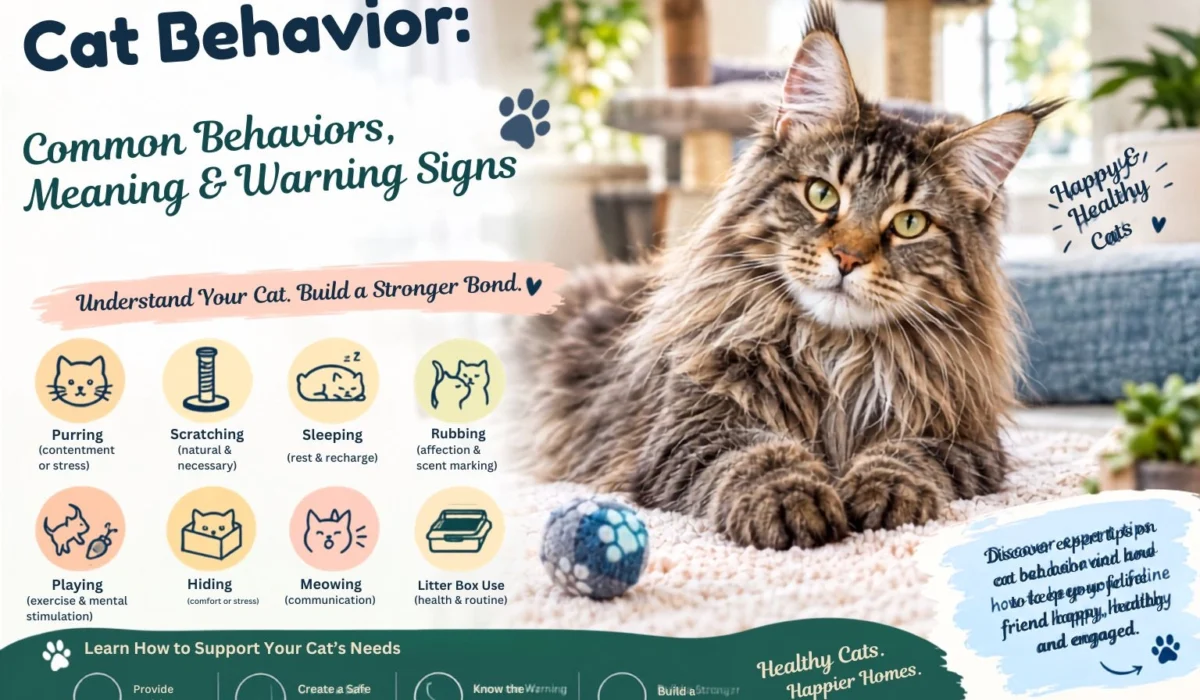
Cat Behavior : Common Behaviors, Meaning and Warning Signs
Cats talk constantly; they just rarely use words to do it. Instead, they lean on body language, sound, movement, scent, and everyday habits to tell you what’s going on.
If your cat kneads the blanket, trails you from room to room, suddenly vanishes under the bed, shreds the sofa arm, or decides 3 a.m. is playtime, you’ve probably wondered what any of it actually means.
Getting a handle on cat behavior makes daily life with your cat a lot easier, and it also helps you catch it early when something’s genuinely off.
Most feline behavior is just instinct at work. Scratching, climbing, grooming, play-hunting, hiding, marking all of it comes with the territory of being a cat. That said, a sudden shift in a behavior your cat has always had can sometimes be a real signal of stress, discomfort, or a health issue worth looking into.
This guide walks through common cat behaviors, what they typically mean, which cat behaviors are actually worth worrying about, and how to build a home environment that supports your cat’s physical and emotional needs.
What Are Common Cat Behaviors?
Common cat behaviors include:
- Purring
- Kneading
- Scratching
- Grooming
- Sleeping for long periods
- Hiding
- Rubbing against people
- Head bunting
- Meowing and other vocalizations
- Chasing and pouncing
- Zooming around the house
- Kneading blankets
- Climbing and perching
- Hunting or stalking toys
- Urine marking
- Using the litter box
The key is never judging a behavior in isolation, look at your cat’s age, personality, environment, and normal daily rhythm instead.
Take scratching furniture, for instance. It doesn’t automatically mean your cat is being destructive. Scratching is a completely natural behavior that helps cats maintain their claws while leaving both a visual and scent mark. Give your cat an appropriate scratching post, and you can redirect that instinct without trying to stamp it out entirely.
Cat Behaviors List: What Your Cat May Be Telling You
Every cat has its own personality, but a lot of behaviors still have pretty recognizable meanings behind them.
1. Purring
Purring is usually linked to contentment a relaxed cat might purr while being petted or just sitting next to you. But purring doesn’t always mean “happy.” Some cats purr when they’re frightened, stressed, or uncomfortable too.
The trick is reading the rest of the body language alongside it. A loose posture, soft eyes, relaxed ears, and an easy tail are far more reassuring signs than purring on its own.
2. Kneading
Kneading is when a cat rhythmically pushes its paws against a blanket, bed, or your lap, one of the most instantly recognizable pieces of normal cat behavior out there.
It actually starts in kittenhood, when kittens press against their mother while nursing to encourage milk flow. Adult cats often keep doing it simply because it feels comforting or is tied to relaxation. If your Maine Coon kneads a soft blanket before settling in for a nap, there’s generally nothing to worry about letting it happen.
3. Rubbing Against You
When a cat rubs its head or body against your legs, it’s likely doing two things at once: showing affection and leaving its scent behind. Cats carry scent glands around their cheeks and head, and rubbing helps build a familiar scent profile throughout their environment. It also often works as a social greeting, especially when you walk through the door.
4. Scratching
Scratching is a normal feline activity, not simply “bad behavior” to be corrected. Cats scratch to maintain their claws, stretch out their bodies, leave visual marks, deposit scent from their paw glands, and burn off energy.
If your cat’s going after the couch, put a sturdy scratching post right next to that spot, choosing a vertical or horizontal style based on what your cat already seems to prefer. Don’t punish scratching just make the appropriate spot more appealing than the sofa.
5. Grooming
Cats are naturally meticulous about keeping themselves clean, and regular grooming helps maintain a healthy coat while clearing out loose hair.
Maine Coons in particular have long coats that need consistent upkeep. If you’re bringing home a Maine Coon kitten, understanding grooming needs is a genuinely important part of being a responsible owner see our Maine Coon grooming, feeding, and health care guide for the practical side of it.
6. Hiding
Occasional hiding is entirely normal. Cats hide when they’re sleeping, tired, overwhelmed, or just want a quiet spot to themselves. A new kitten might hide a lot more during their first few days in a new home to give them time rather than repeatedly pulling them out of their hiding spot.
That said, hiding that suddenly becomes frequent is worth paying attention to, especially alongside reduced appetite, low activity, vomiting, litter box changes, or other unusual symptoms.
7. Chasing, Stalking, and Pouncing
Cats are natural-born predators, and even a strictly indoor cat needs regular chances to express hunting instincts. That might look like stalking a toy, crouching behind furniture, chasing a ball, or pouncing on a feather wand all of which give real physical exercise and mental stimulation.
For Maine Coon owners specifically, sturdy interactive toys tend to work well, since these cats are large, active, and generally love a good game. Our guide to training and fun activities for Maine Coon kittens can help turn these natural instincts into positive daily routines.
8. Zoomies
Those sudden bursts of running from room to room sprinting, jumping onto furniture, chasing an invisible target, then suddenly flopping down are commonly known as zoomies. They tend to show up after litter box use, right after waking up, or during that evening burst of energy a lot of cats seem to get. Almost always, this is just normal, healthy, playful behavior.
9. Meowing and Vocalizing
Cats use different sounds for different messages. A meow might mean “feed me,” “pay attention to me,” “open this door,” “I want something,” or simply “something’s bothering me right now.”
Some cats are naturally chattier than others. But if your cat suddenly starts vocalizing a lot more than usual, it’s worth asking whether something’s changed either in their environment or their health.
Kittens vs. Adult Cats: How Behavior Shifts With Age
Age changes behavior quite a bit. Kittens generally spend more time exploring, chasing, climbing, biting, and pouncing as part of learning through play. Adult cats tend to settle into far more predictable routines. A kitten might attack your shoelaces purely to practice hunting skills.
An adult cat, on the other hand, might prefer a short interactive play session followed by a long, satisfied nap. This is exactly why early socialization and positive early experiences matter so much they help shape the calmer, more confident adult cat down the line.
Our guide on how to raise a Maine Coon kitten covers socialization, feeding, grooming, play, and daily routines in more depth.
Cat Behaviors to Worry About
Not every strange behavior is an emergency, but a sudden change shouldn’t automatically get written off as “just a cat being a cat” either. Some cat behaviors genuinely worth watching closely:
- Sudden aggression: A cat that suddenly starts biting, hissing, swatting, or lashing out may be frightened, stressed, territorial, overstimulated, or in pain. Medical issues can sometimes drive aggressive behavior too, so anything sudden or significant deserves a vet’s opinion.
- Sudden hiding: A cat that’s normally social but starts hiding for long stretches may be signaling that something’s changed. Watch for it alongside reduced appetite, less activity, weight loss, vomiting, diarrhea, grooming changes, trouble moving, or litter box changes.
- Changes in litter box behavior: Going outside the box is one of the most important shifts to take seriously. It can stem from litter preferences, environmental stress, territorial tension, or an underlying medical condition — never assume your cat is doing it out of spite. If a previously reliable cat suddenly stops using the box, contact your vet.
- Excessive grooming: Grooming is normal; excessive, repetitive licking of one specific area is different, and may point to skin irritation, pain, stress, or another underlying issue. Watch for bald patches, redness, or sores.
- Reduced grooming: The opposite can also be a red flag. A normally well-groomed cat that suddenly stops may be uncomfortable, overweight, stressed, or unwell. Long-haired breeds like Maine Coons can mate surprisingly fast once grooming drops off.
Why Does Cat Behavior Actually Change?
There’s rarely one universal explanation for a behavior shift. Common triggers include moving to a new home, adding another pet, changes among household members, construction or loud noise, shifts in feeding routine, new furniture or unfamiliar smells, litter box changes, a lack of play or enrichment, conflict between cats, pain or illness, or simply getting older.
A genuinely useful approach is asking three questions:
- What changed right before the behavior started?
- What exactly is the cat doing?
- What happens right afterward?
For instance, if your cat attacks another cat every evening right after spotting an outdoor cat through the window, the real trigger is likely redirected arousal not genuine dislike of the housemate.
How to Encourage Healthy Cat Behavior?
The most effective way to improve behavior is usually meeting your cat’s natural needs, not punishing the unwanted action after the fact.
- Provide vertical space: Cat trees, shelves, and window perches let cats survey their surroundings from a spot that feels secure, especially valuable in multi-cat households.
- Offer real scratching options: Try different heights, textures, and both vertical and horizontal designs, placed near the spots your cat already tends to scratch.
- Build in daily play: Interactive toys that let your cat stalk, chase, pounce, and “capture” work well. Short, frequent sessions are often more realistic than expecting one long session a day and rotating toys keeps things interesting.
- Make resources easy to reach: Food, water, litter boxes, resting spots, hiding places, and play opportunities should all be genuinely accessible. Indoor cats especially benefit from an environment that lets them express these natural behaviors freely. Current guidance from the Feline Veterinary Medical Association emphasizes exactly this meeting a cat’s environmental needs supports their physical, emotional, and cognitive wellbeing all at once.
- Skip physical punishment: Punishment tends to increase fear and can actually make behavior problems worse, not better. Instead, figure out the reason behind the behavior and change the environment, or teach an alternative. If your cat’s scratching the sofa, redirect that energy to an appropriate post and reward them for using it.
A Real-World Example
Picture a two-year-old Maine Coon that suddenly starts hiding every time visitors show up.
Rather than assuming the cat’s “gone unfriendly,” look at the actual situation. Maybe the visitors are loud. Maybe they approach the cat directly, or try to scoop it up right away. The cat may simply be choosing distance because the whole scene feels like a lot.
A better approach is offering a quiet retreat and letting the cat approach visitors entirely on its own terms over time, pairing calm interactions with treats or other positive experiences. The goal was never to force socialization. It’s helping the cat feel safe enough to choose it.
Understanding Behavior in Maine Coon Cats Specifically
Maine Coons have a reputation for being social and playful, but individual cats still vary a lot. One Maine Coon might shadow its owner around the entire house; another might prefer sitting nearby without constant handling. Some love retrieving toys, others gravitate toward climbing, chasing, or just exploring on their own terms.
At Bella Dolce Maine Coons, we believe responsible kitten ownership starts with understanding the individual cat in front of you, rather than expecting every kitten to behave identically. If you’re researching available kittens, visit our Maine Coon kittens page to learn more about the kittens and the care they receive during early development. You can also check out the Maine Coon cats for sale in Washington if you’re considering adding one to your family.
When Should You Actually Call the Vet?
Reach out to your veterinarian when a behavior change is sudden, persistent, severe, or paired with physical symptoms. That includes a cat that stops eating, has trouble urinating, vomits repeatedly, becomes unusually lethargic, shows signs of pain, suddenly turns aggressive, stops using the litter box, shows a significant change in grooming, loses weight without explanation, hides continuously, or has a major shift in normal activity level.
Behavior is often one of the very first signals that something’s changed. A vet can help sort out whether it’s behavioral, environmental, medical, or some mix of all three.
Bringing It Together
Understanding cat behavior was never about memorizing a fixed dictionary where every meow or tail flick has exactly one meaning. It’s about learning what’s actually normal for your individual cat.
Watch the patterns. Pay attention to body language. Give your cat real opportunities to scratch, climb, play, hide, explore, and rest. And most importantly, take sudden or persistent changes seriously rather than shrugging them off.
For Maine Coon owners, this understanding becomes even more valuable as these large, personality-filled cats grow and settle into who they are. Whether you’re raising a new kitten or living with an adult Maine Coon, patience and genuine observation build a stronger relationship over time and the better you understand cat behavior, the easier it gets to recognize normal habits, respond to the ones you’d rather redirect, and notice early when your cat might need professional help.
Frequently Asked Questions
What are common cat behaviors?
Purring, kneading, grooming, scratching, hiding, rubbing against people, vocalizing, playing, climbing, hunting, sleeping, and using the litter box. Most are just normal ways cats communicate or meet their natural needs.
Why does my cat suddenly hide?
Stress, fear, environmental changes, or illness can all be behind it. If the hiding is sudden or persistent especially alongside appetite changes, reduced activity, vomiting, pain, or litter box changes talk to your veterinarian.
Why does my cat scratch furniture?
Scratching is a natural behavior tied to claw maintenance, stretching, and both visual and scent marking. Give your cat sturdy scratching posts that match the texture and orientation they already prefer, rather than trying to eliminate scratching altogether.
What cat behaviors should I actually worry about?
Sudden aggression, persistent hiding, excessive or reduced grooming, litter box changes, major appetite shifts, unusual vocalization, and sudden inactivity are all worth a vet’s attention. How urgent it is depends on the individual cat and any accompanying symptoms.
Does cat behavior change with age?
Yes. Kittens are typically more exploratory and playful, while adult and senior cats often settle into calmer routines. A gradual shift can be totally normal, but a sudden one is worth investigating, since health problems can affect behavior at any age.
Also Read: Cat Allergies