

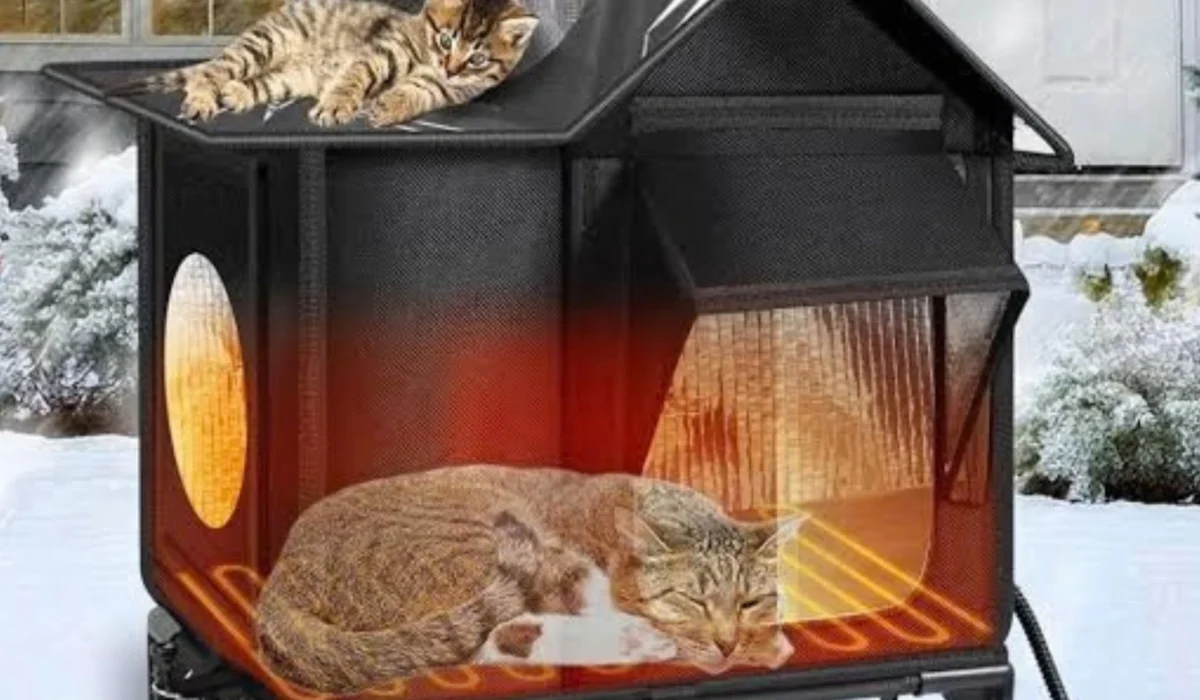
Heated Cat House: Safe Outdoor Shelter for Cats in Winter
When temperatures drop, a warm place to sleep becomes much more than a comfort for cats that spend time outdoors. Cold air, wind, rain, snow, and damp bedding can quickly make an outdoor environment unsafe.
A heated cat house can provide extra warmth during cold weather. But the heater is only one part of a good winter shelter. Insulation, waterproofing, ventilation, shelter size, bedding, electrical safety, and location all matter.
For community cats and indoor-outdoor cats, a properly designed heated cat house outdoor setup can offer protection from harsh weather. Still, veterinary organizations recommend keeping pet cats indoors whenever possible during severe colds. The ASPCA says pets can become disoriented, injured, or even die from prolonged exposure to cold weather.
So what makes a shelter genuinely useful in winter? And when does a heated outdoor house for cats make sense? Let’s look at the practical details.
What Is a Heated Cat House?
A heated cat house is an insulated shelter designed to provide a warm and protected resting space for a cat. Some models use a pet-safe heated pad. Others use a low-power heating system or rely primarily on insulation and the cat’s body heat.
A good heated insulated cat house should protect against more than low temperatures. It should help block wind and precipitation while giving the cat a dry place to rest.
For community cats, shelter organizations such as Bella Dolce Maine Coon recommend a small waterproof shelter with a cat-sized opening. They also recommend raising the shelter off the ground and using straw as bedding because straw resists moisture.
This is important because a large shelter is not necessarily warmer. A smaller space allows the cat’s body heat to warm the interior more efficiently.
Why Does an Outdoor Cat Need a Warm Shelter?
Cats have fur and can tolerate a range of temperatures. That does not mean they are protected from extreme cold.
Merck Veterinary Manual notes that prolonged exposure to very cold weather can result in hypothermia. Frostbite is also possible, especially in vulnerable areas such as the ears, feet, and tail. Wet or windy conditions can increase the risk.
VCA explains that when environmental temperatures fall below 32°F, blood vessels near the skin constrict. In extreme or prolonged cold, this can contribute to tissue freezing and frostbite.
That makes a heated outdoor cat house for winter useful for some outdoor situations. However, a shelter should not be viewed as permission to leave a pet cat outside through dangerous weather. Indoor housing is the safer option for companion cats during extreme cold.
What Should You Look for in a Heated Cat House?
Not every warm-looking cat house is suitable for outdoor winter use. Before buying or building one, look at these features.
1. Strong insulation
Insulation slows the loss of heat. The walls, floor, and roof should be designed to reduce exposure to cold air.
A good heated cat house should still retain warmth if the heating element is switched off. This is an important safety principle. The shelter should work as a shelter first and a heated product second.
2. Waterproof construction
Rain and snow should stay outside. A wet cat loses heat more quickly than a dry cat. Wet bedding can also make a shelter uncomfortable and cold.
3. A cat-sized entrance
A huge doorway may look convenient, but it lets more cold air enter. ASPCApro recommends a small entrance that is roughly cat-sized. Its winter shelter guidance says an opening around 5½ to 6 inches can help retain heat while discouraging larger animals from entering. Some outdoor shelters also use a flap over the entrance to reduce drafts.
4. Raised flooring
Never place a winter shelter directly on cold wet ground when you can avoid it. An elevated structure helps separate the sleeping area from moisture and cold surfaces. It can also help the shelter retain warmth.
A small platform, sturdy pallet, or similar elevated base can work depending on the shelter design.
5. Safe heating
This is where buyers need to be careful. A heated bed or heating pad can create burn risks. VCA specifically warns that heating pads can become hot enough to burn pets, particularly animals that sleep deeply or have difficulty moving away from the heat source. Electrical cords can also be a chewing hazard.
That means “heated” does not automatically mean “safe.” Choose a product specifically designed for pets and follow the manufacturer’s instructions carefully.
Heated Cat House Outdoor Safety: What Matters Most?
A heated cat house outdoor setup needs more attention than an indoor heated bed because weather and electrical hazards are added to the equation.
Protect all electrical components
Outdoor moisture and electricity are a dangerous combination. Only use equipment that is specifically designed and rated for the intended outdoor environment. Keep connections protected from water and inspect cords regularly.
Never use a damaged cord. Cats should also be unable to chew the cable.
Give the cat a way to leave the heat
Your cat should never be trapped in a space with a heat source. VCA recommends making sure a pet can move away from a heating source if it becomes too warm. This is especially important for heated beds and pads.
Do not cover heating equipment incorrectly
Never modify a heated product by adding materials that could interfere with its operation or create overheating. Follow the exact instructions supplied with the product.
Check the shelter regularly
Look for:
- Wet bedding
- Damaged wires
- Chewed materials
- Water leaks
- Snow blocking the entrance
- Mold or odors
- Structural damage
- Overheating
Winter shelters need regular maintenance rather than being installed and forgotten.
Heated Insulated Cat House vs. Regular Shelter
Do you actually need a heated shelter? Not always.
For many community cats, a properly insulated and dry shelter with straw bedding can provide meaningful protection without an electrical heating system.
A heated insulated cat house becomes more relevant when conditions are especially cold or when a particular cat is more vulnerable.
Cats that may need additional protection include kittens, senior cats, very thin cats, and cats with health problems. Merck notes that small, young, and older animals are among those at greater risk of hypothermia in emergency situations.
Your veterinarian can also help you decide whether a specific cat needs additional warming support.
What Bedding Is Best Inside a Heated Cat Shelter?
For outdoor community-cat shelters, straw is generally preferred over hay, blankets, or towels.
Why?
Because outdoor bedding can become damp. ASPCApro similarly recommends straw rather than blankets or towels for outdoor winter shelters because those materials can absorb moisture.
This is one of the simplest upgrades you can make to an outdoor shelter. For an indoor heated bed, the manufacturer’s recommended bedding should be followed instead.
How Big Should an Outdoor Cat Shelter Be?
Bigger is not always better. A shelter around 2 feet by 3 feet and at least 18 inches high can work for several community cats, while a smaller shelter may be better when fewer cats use it.
The goal is not to create a large room. The goal is to create a protected sleeping space that a cat can warm with its own body heat.
A huge dog house can therefore perform poorly in cold weather because heat dissipates more quickly.
Where Should You Place a Heated Outdoor House for Cats?
Placement can make a surprisingly large difference.
Put the shelter somewhere:
- Protected from prevailing wind
- Away from standing water
- Off the cold ground
- Away from busy roads
- Protected from predators and loose dogs
- Accessible to the cat
- Easy for you to inspect
The entrance should not face directly into strong wind. If snow is expected, inspect the doorway regularly and make sure the cat can get in and out.
What About Heated Cat Beds for Outside?
Heated cat beds for outside can be useful when the product is specifically designed for outdoor conditions and used exactly as directed.
But a heated bed is not a substitute for a shelter. A bed exposed to rain, snow, and wind does not offer the same protection as an enclosed insulated structure.
For an outdoor cat, think in layers:
Shelter + insulation + dry bedding + protection from wind and precipitation + safe heat when appropriate.
This combination is generally more practical than relying on a heating pad alone.
How Cold Is Too Cold for Cats?
There is no single temperature that applies equally to every cat. Age, body condition, coat, health, acclimation, wind, moisture, and access to shelter all influence cold tolerance.
That does not mean every cat will develop hypothermia immediately at a particular number. Instead, use temperature as one part of the decision. When weather becomes severe, keeping companion cats indoors is the safest approach.
Signs a Cat May Be Too Cold
Watch for unusual cat behavior and physical changes. Possible warning signs include:
- Weakness
- Confusion or disorientation
- Reduced responsiveness
- Slow or shallow breathing
- Pale or abnormal skin
- Cold ears, paws, or tail
- Swelling or pain in exposed areas
- Difficulty walking
- Collapse
Merck notes that hypothermic pets may become weak or disoriented and can develop shallow breathing, a slow pulse, collapse, or unconsciousness.
Frostbite can cause pale, gray, blue, swollen, painful, or eventually blackened tissue. These are veterinary concerns. Do not rely on a heated house to treat hypothermia or frostbite. Move the cat to a warm, dry location and contact a veterinarian immediately.
A Real-World Example: Preparing a Maine Coon for Winter
Imagine a family in Washington with a Maine Coon that enjoys supervised time in a secure catio.
The family notices that cold rain and wind make the outdoor area uncomfortable during winter.
Instead of putting an ordinary blanket in an open area, they create a protected resting zone with a weather-resistant shelter. The structure is raised off the ground and filled appropriately with dry insulation.
They also make sure the cat can move away from any supplemental heat source. That setup provides a better balance between warmth, safety, and choice.
At Bella Dolce Maine Coon, we know that preparing a home for a Maine Coon involves more than choosing food and toys. These cats need comfortable places to rest, play, climb, explore, and retreat.
New owners can learn more through our guide on how to raise a Maine Coon kitten, which covers daily care, socialization, nutrition, grooming, and creating a suitable home environment.
For grooming and general wellness, our Maine Coon grooming, feeding, and health care guide is another useful resource.
And families preparing to welcome a new companion can explore our Maine Coon kittens page to learn more about Bella Dolce Maine Coon cats.
Heated Cat Shelter for Community Cats: A Practical Setup
For community cats that remain outdoors, a simple shelter can often be more useful than an overly complicated design.
A practical winter setup may include:
- A small waterproof shelter
- Insulated walls and floor
- A cat-sized entrance
- Straw bedding
- An elevated base
- Protection from wind
- Fresh water nearby
- Regular maintenance
- Optional pet-safe supplemental heat when appropriate
- A safe escape route
A heated option may be helpful in particularly cold conditions. But proper shelter construction remains the foundation.
Common Mistakes to Avoid
A few simple mistakes can make an outdoor cat house less useful.
Using a large shelter
A huge space can lose heat quickly.
Using blankets outdoors
Wet blankets can become cold and uncomfortable. Straw is preferred for many community-cat shelter setups.
Using an indoor heating pad outdoors
Indoor products are not automatically suitable for outdoor weather.
Leaving electrical cords exposed
Cats may chew cords and damaged insulation can create serious hazards.
Blocking the escape route
A shelter should never trap a cat inside.
Ignoring severe weather
Even the best cat warm house does not make extreme outdoor conditions safe for a pet cat.
Final Thoughts
A heated cat house can be a useful part of winter care when an outdoor cat genuinely needs a protected resting space.
But heat should never be the only consideration. The best heated outdoor house for cats starts with a dry and insulated structure. It should have a cat-sized entrance, protection from wind and precipitation, safe bedding, stable construction, and a design that lets the cat move away from supplemental heat.
For community cats, straw-filled insulated shelters are often a practical and low-maintenance solution. For companion cats, bringing them indoors during severe colds remains the safest choice.
For every Maine Coon owner, winter preparation is ultimately about giving your cat safe choices. A warm shelter, appropriate indoor space, good nutrition, regular grooming, enrichment, and veterinary care all contribute to a healthier and more comfortable life.
FAQ
Is a heated cat house safe for outdoor cats?
It can be when the shelter and heating equipment are specifically designed for the environment and installed according to safety instructions. Heating pads can create burn and electrical risks, so cats should be able to move away from the heat source.
What is the best insulation for an outdoor cat house?
For community-cat shelters, straw is widely recommended because it resists moisture and provides insulation. The shelter itself should also be waterproof, windproof, and raised off the ground.
Do outdoor cats need a heated shelter in winter?
Not every outdoor cat needs an electrically heated shelter. A small insulated waterproof shelter with dry straw can provide important protection. Supplemental heat may be useful in particularly cold conditions or for vulnerable cats. Severe weather can still be dangerous even with shelter.
Can I use a heated cat bed outside?
Only use a heated bed that is specifically designed for the outdoor conditions where it will be placed. Follow the manufacturer’s instructions and check for cord, water, burn, and overheating risks. A heated bed should be used inside a properly protected shelter rather than left exposed to the elements.
Also Read: Best Non Toxic Flowers for Cats