

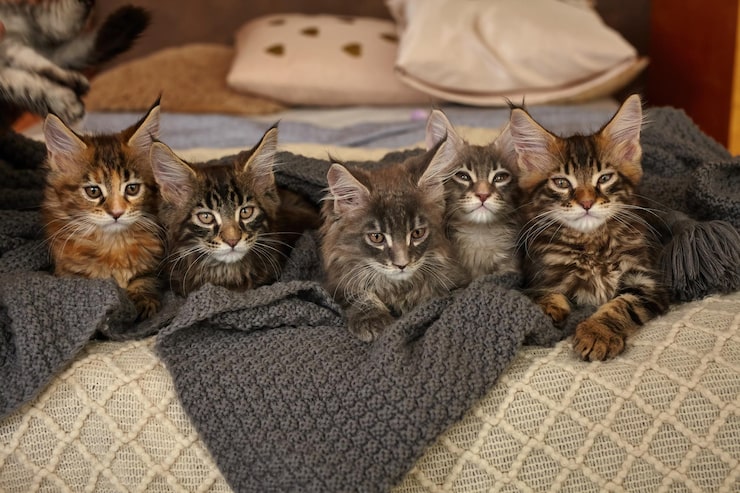
Healthy Maine Coon Kittens for Sale in Washington State
Buying a Maine Coon kitten is genuinely one of the more fun purchases you’ll ever make, but choosing a healthy one takes more than admiring a gorgeous coat, huge paws, or a sweet personality. Before any deposit changes hands, you should really understand the kitten’s veterinary history, vaccination records, parasite prevention, the family’s health background, and how the breeder actually screens for problems.
If you’re set on finding a healthy Maine Coon kitten, the breeder’s approach to health matters just as much as the individual kitten sitting in front of you.
A responsible breeder should welcome your questions, hand over reasonable documentation, and be able to explain exactly how their kittens are raised. TICA recommends that prospective buyers request health and genetic records for the parents, review vaccination history, and fully understand the written sales agreement before committing to a purchase.
This guide walks through what to actually check before buying a Maine Coon kitten and the warning signs that should make you slow down.
What Actually Makes a Kitten Healthy?
A healthy Maine Coon kitten needs to be more than good-looking. When you meet one in person, look for:
- Bright, clear eyes
- Clean ears
- A clean, well-kept coat
- Good muscle tone
- Normal curiosity and activity level
- No ongoing sneezing or nasal discharge
- No obvious bald patches or irritated skin
- A healthy appetite
- Body condition that fits its age
TICA’s buyer guidance points to these same basics: clear eyes, a clean coat, solid muscle tone, clean ears and specifically advises watching for respiratory symptoms or skin issues while you’re there.
That said, a visual check-in is only step one. A kitten can look perfectly healthy on the surface while still carrying an incomplete medical history or an inherited risk that isn’t visible to the eye. That’s exactly why documentation and the breeding program’s actual health practices matter so much.
1. Ask Whether a Vet Has Already Examined the Kitten
One of the first things worth asking is simple: “Has this kitten been examined by a veterinarian?“
Find out when that exam happened, and ask to see the records. A vet exam can catch things a prospective buyer would never notice on their own, and it also gives you a real baseline for the kitten’s health before the move to a new home.
Worth asking whether the exam actually covered:
- A general physical exam
- Weight and body condition
- Heart and lung assessment
- Eyes and ears
- Oral health
- Parasite check
- General developmental assessment
What’s actually included depends on the vet and the kitten’s age at the time. TICA also recommends that buyers have their own vet examine the kitten shortly after bringing it home — so a breeder’s exam shouldn’t be treated as a substitute for building your own vet relationship. Think of it as a starting point, not the final word.
Why Your Own Vet Visit Still Matters
Moving to a new home is a big deal for a kitten. Your own vet can review the existing records, do an independent exam, and put together a preventive-care plan tailored to your situation.
Before you buy, ask the breeder what timeframe the contract specifies for that first vet visit on your end. Some contracts are fairly specific about this.
2. Actually Review the Vaccination Records
Vaccination history is another non-negotiable piece of choosing a healthy kitten.
Don’t settle for “yes, the kitten’s been vaccinated” as an answer to ask to see the actual paperwork.
Depending on the kitten’s age and current veterinary recommendations, records typically cover core feline vaccines. TICA’s buyer guidance specifically calls for reviewing vaccination and vet records, and notes that a reputable breeder should have no problem providing that documentation.
A proper record should clearly show:
- Which vaccine was given
- When it was administered
- Which vet or clinic gave it
- When the next one is due
- Whether any additional preventive care is recommended
What About Rabies?
Rabies vaccination requirements shift depending on the kitten’s age and local regulations, so don’t assume every kitten gets the exact same shots on the exact same timeline. Ask your own vet what’s appropriate given your kitten’s age and where you live.
The real priority is getting clear documentation and understanding exactly what’s still outstanding once the kitten comes home with you.
3. Ask About Parasite Prevention
Parasites are worth a direct conversation before you buy.
Ask the breeder plainly: “What parasite prevention or deworming has this kitten had?”
Dig into the specifics:
- What product was used
- When it was given
- Why it was given
- Whether more treatment is scheduled
- Whether the kitten’s actually been screened for parasites
Don’t give a kitten any medication just because someone online swore by it. Parasite treatment depends heavily on the kitten’s age, weight, general health, and the specific parasite in question; this is something your own vet should be guiding, not internet advice.
Why the Documentation Actually Matters
A breeder who keeps organized veterinary records should be able to walk you through the kitten’s preventive-care history without hesitation. If the answers you get are vague, or there’s simply no documentation to show, that’s your cue to ask more questions before moving forward.
4. Understand the Genetic Testing Behind the Kitten
When you’re evaluating a kitten’s health, don’t stop at the kitten itself and ask about its parents too, since this really matters for anything inherited.
TICA recommends asking breeders for health and genetic records on both the sire and dam. For Maine Coons specifically, TICA flags several conditions worth screening for, including hypertrophic cardiomyopathy (HCM), hip dysplasia, luxating patella, spinal muscular atrophy (SMA), and pyruvate kinase deficiency.
Genetic testing doesn’t guarantee a kitten stays healthy forever; nothing can promise that. What it does is give breeders real information to make smarter breeding decisions.
Questions Worth Asking About Genetic Testing
- Which specific genetic tests were run?
- Which parent was tested?
- What were the actual results?
- Can I see the documentation myself?
- Are there other health screening practices used alongside the DNA testing?
A genuinely transparent breeder should be able to tell you exactly what was tested, rather than offering a vague “the parents are genetically healthy” and leaving it at that. Specifics matter a lot more than reassurance.
5. HCM Screening Deserves Special Attention
Hypertrophic cardiomyopathy (HCM) is worth its own section here; it’s that important for Maine Coon health.
HCM is the most commonly diagnosed heart disease in cats overall. Cornell’s College of Veterinary Medicine explains that the condition causes the heart muscle to thicken, and that genetics appears to play a role in certain breeds, Maine Coons included.
TICA recommends that responsible Maine Coon breeders combine genetic DNA testing with periodic echocardiograms read by a board-certified veterinary cardiologist. TICA is also clear that DNA testing alone isn’t enough on its own, since not every mutation linked to the disease has actually been identified yet.
That distinction is genuinely important to understand.
DNA Testing Versus Echocardiography
A genetic test screens for specific, known mutations. An echocardiogram, on the other hand, lets a veterinary cardiologist actually look at the structure and function of the heart itself. These two tools aren’t interchangeable; they check different things.
So instead of asking a breeder “are your cats tested for HCM?”, ask something more specific: “What type of HCM screening do you actually use on your breeding cats?“ Then ask to see whatever documentation backs it up.
6. Ask About Hip Screening Too
Maine Coons are big cats, so it’s worth asking breeders about orthopedic health, not just the heart.
TICA notes that Maine Coons can be prone to joint issues, and that many breeders screen their breeding cats for hip dysplasia using X-rays. Screening for luxating patella comes up too.
Research referenced by TICA has actually looked into hip dysplasia across the breed; one study following more than 5,000 pedigreed Maine Coons over a 20-year span turned up meaningful data on how common the condition is and how heritable it appears to be.
None of that means every Maine Coon is destined to develop hip problems. It just means orthopedic health is a legitimate thing to bring up when you’re vetting a breeder.
Questions Worth Asking About Hip Health
- Do you screen your breeding cats for hip dysplasia?
- What kind of screening do you use?
- Can I see the actual results?
- Have there been any known orthopedic issues in your lines?
- How do you monitor kittens as they grow?
A good breeder should be able to walk you through their approach honestly, without making promises they can’t actually back up.
7. How to Spot a Well-Socialized Kitten
Health isn’t the whole picture, though. Temperament and early socialization have a huge effect on how smoothly a kitten settles into your household.
TICA recommends actually watching how a kitten responds to people, and notes that a well-socialized kitten should become comfortable and playful after a reasonable adjustment period not instantly, necessarily, but eventually.
Ask the breeder how their kittens are actually raised:
- Are they handled regularly?
- Do they interact with a variety of people, not just the breeder?
- Are they used to normal household sounds?
- Have they already experienced grooming?
- Are they comfortable being picked up and held?
- Have they been introduced to a carrier?
- Have they lived alongside other cats?
A kitten doesn’t need to bolt straight toward a stranger to be considered well-socialized; plenty of cats are naturally cautious by nature. What actually matters is how the kitten responds once it’s had a little time to feel comfortable.
Questions to Bring Before You Buy
It’s worth saving this list before making a decision.
On health:
- Has the kitten been examined by a vet?
- Can I see the veterinary records?
- Which vaccinations has the kitten had?
- When’s the next one due?
- What parasite prevention has been done?
- What health testing have the parents had?
- What HCM screening do you use?
- Are the breeding cats screened for hip dysplasia?
- Are there other genetic tests being run?
On the breeder and kitten care:
- Can I meet or at least see the parents?
- How are the kittens socialized?
- What food is the kitten currently eating?
- What litter is it used to?
- When can it go home?
- Is there a written contract?
- What does the health guarantee actually cover?
- What support is available after purchase?
- Can I talk to past buyers, if references exist?
TICA’s own buyer guidance echoes this same list of health records, vaccinations, ongoing care needs, health guarantees, return policies, contracts, and references.
Warning Signs Worth Taking Seriously
Most buyers naturally focus on the positives, but knowing what should make you pause is just as important.
- They refuse to provide health records: You should always be able to see the kitten’s veterinary and vaccination history, no exceptions.
- They won’t discuss the parents: TICA recommends asking to see the kitten’s parents in person, or over video if an in-person visit isn’t practical.
- They make unrealistic health guarantees: No honest breeder can promise a living animal will never develop any health condition, ever.
- They pressure you to pay immediately: A responsible purchase shouldn’t feel like a high-pressure sales pitch.
- There’s no written contract: TICA specifically recommends a written sales agreement covering things like health guarantees and return policies.
- They’re vague about genetic testing: Ask exactly what was tested, and ask to see the documentation directly.
- They want unusual payment methods: TICA warns buyers about scams and advises real caution around wire transfers, gift cards, and similarly risky payment setups.
- They won’t talk about post-purchase support: A genuinely responsible breeder still cares about a kitten’s welfare after it’s left their home.
Getting Your Home Ready
Once you’ve picked a kitten, get your home set up before pickup day arrives. You’ll want:
- A secure carrier
- Food
- Water bowls
- A litter box
- Appropriate litter
- A scratching post
- Comfortable bedding
- Safe toys
- Grooming tools
- A quiet space for the kitten to settle into
Maine Coons grow into genuinely large cats, so pick your gear with that eventual size in mind not just what fits a tiny kitten today. TICA notes that Maine Coons mature slowly and may not reach full size until they’re several years old, so don’t buy everything based purely on how small your kitten looks right now. Think ahead.
Keep the First Few Days Low-Key
Moving to a new home is genuinely stressful for a kitten. TICA recommends sticking closely to the breeder’s instructions, since changes in food, water, litter, and general environment can trigger minor issues even in an otherwise perfectly healthy kitten.
Keep that first environment calm and quiet. Let the kitten explore gradually, at its own pace. And book that vet visit according to your breeder’s contract and your own vet’s recommendations.
Choosing a Healthy Kitten From Bella Dolce
If you’re on the hunt for a healthy Maine Coon kitten here in Washington State, the goal should always be understanding the kitten and the breeding program behind it before committing to anything.
At Bella Dolce Maine Coons, prospective families can learn about our cats and kittens before making any decisions. You can check current availability among our Maine Coon kittens whenever you’re ready to look.
It’s also worth learning about the cats behind the program itself. Take a look at our Maine Coon cats and current litters as part of your research. If registration and pedigree matter to you, you can also look into information on our TICA-registered kittens and cats.
Before committing to anything, review our purchase and delivery information so you know exactly how the process works. A good breeder should make it easy to ask questions and never be uncomfortable.
Final Checklist Before You Commit
Before putting down your deposit, make sure you can genuinely answer “yes” to each of these:
- Have I reviewed the kitten’s veterinary records?
- Do I understand the vaccination history?
- Have I asked about parasite prevention?
- Have I asked about the health of both parents?
- Have I asked about genetic testing specifically?
- Have I asked directly about HCM screening?
- Have I asked about hip screening?
- Have I actually watched the kitten’s behavior in person?
- Have I asked how the kitten was socialized?
- Have I read the health guarantee?
- Have I read the entire purchase contract?
- Do I know what happens after the kitten comes home?
- Do I have a plan in place for veterinary care?
If you’re hitting more than a few “no’s” here, slow down and keep asking questions. A kitten shouldn’t be chosen simply because it happens to be available today.
Final Thoughts
Choosing a healthy Maine Coon kitten takes more than judging on looks alone.
Look at the full picture, the vet exam, the vaccination records, the parasite prevention, the genetic testing on the breeding cats, the specific HCM and hip screening, how the kitten actually behaves, and how it’s been socialized so far. Then read the contract closely, start to finish.
A genuinely responsible breeder should be entirely comfortable discussing all of this with you, and should back it up with clear information, not just ask you to take their word for it.
If you’re considering a Maine Coon kitten here in Washington State, take your time and do the research properly. You’re welcome to browse Bella Dolce’s available kittens, learn about our cats, and review our purchase and delivery process before making your decision.
The simplest way to think about choosing a healthy Maine Coon kitten: ask the questions, verify the records, understand exactly how the breeder handles health, and never let yourself feel rushed into a decision.
FAQ
How can I tell if a Maine Coon kitten is healthy?
Look for clear eyes, a clean coat, clean ears, good muscle tone, and normal activity levels and always back that up with veterinary and vaccination records. Appearance alone isn’t enough on its own; a proper exam tells you far more. TICA recommends having your own vet examine the kitten shortly after purchase.
What health tests should Maine Coon breeders be running?
TICA flags HCM screening as especially important, recommending both genetic DNA testing and regular echocardiograms read by a board-certified veterinary cardiologist. Breeders may also screen for hip dysplasia, luxating patella, SMA, and pyruvate kinase deficiency.
Should I ask to see the kitten’s parents?
Yes, definitely. TICA recommends seeing the parents in person, or over video if a visit in person isn’t possible. It’s also worth asking for the relevant health and genetic records for both the sire and dam.
What vaccination records should come with the kitten?
You should get a clear record showing which vaccines have already been given and what’s coming up next. The right schedule depends on the kitten’s age and current veterinary guidance TICA recommends reviewing this documentation carefully before purchase.
What are the red flags when choosing a breeder?
Watch for a refusal to share health records, dodging questions about the parents, unrealistic health guarantees, no written contract, pressure to pay quickly, and any unusual payment or shipping requests. TICA specifically warns buyers to stay alert to scams and to fully understand the sales agreement before committing.
Also Read: Maine Coon vs Ragdoll