
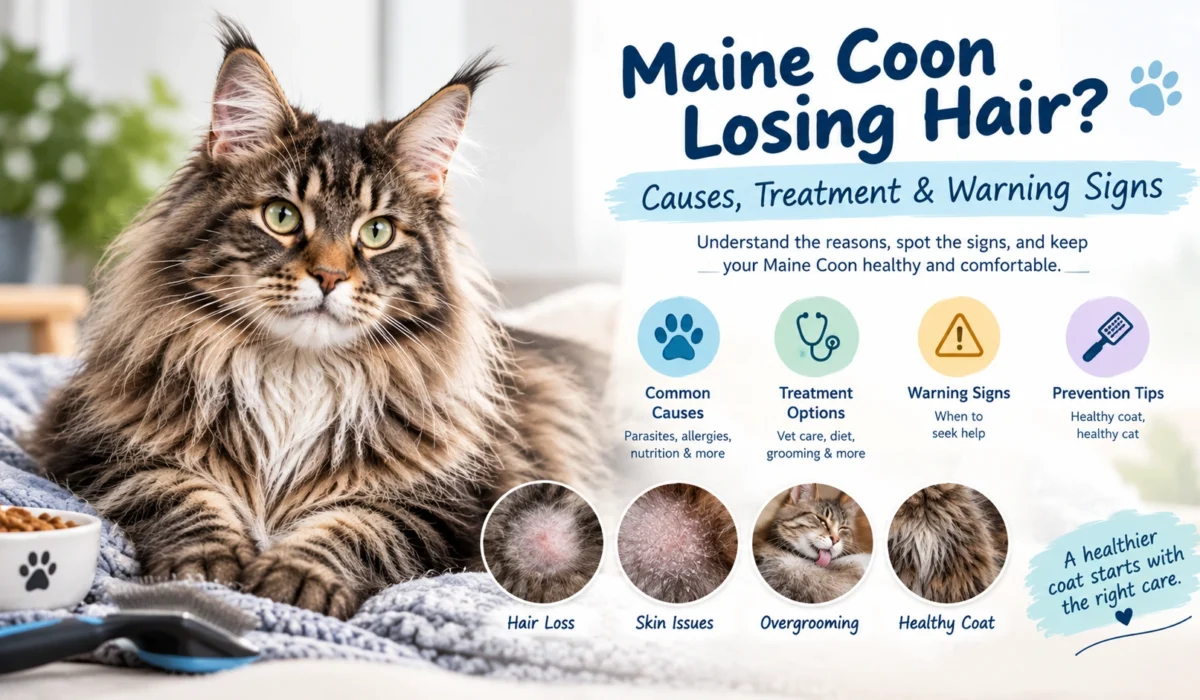
Maine Coon Losing Hair: Causes, Treatment and Warning Signs
Maine Coons are known for their long, thick coats, fluffy tails, and distinctive neck ruffs. So when you notice your Maine Coon losing hair, it is natural to wonder whether something is wrong.
Some hair loss is normal. Cats shed old hairs as their coats renew, and Maine Coons can leave plenty of fur around the house. However, bald patches, thinning fur, excessive grooming, or irritated skin may signal an underlying problem.
Understanding why your Maine Coon is losing hair can help you decide whether simple grooming adjustments are enough or whether your cat needs veterinary care.
This guide explains the common causes of cat hair loss, warning signs to watch for, treatment options, and how nutrition and grooming support a healthy coat.
Is It Normal for a Maine Coon to Lose Hair?
Yes, some hair loss is normal. Cats shed naturally as old hairs fall out and new hairs grow. Maine Coons have a semilong, dense coat that may require regular combing to remove loose fur and prevent tangles.
According to The International Cat Association (TICA), Maine Coons develop slowly, and their mature coats can differ in texture and maintenance needs. Some have silky fur that is relatively easy to manage, while others have cottonier coats that require more frequent grooming.
However, normal shedding should not usually produce obvious bald spots or inflamed skin.
Here is how to distinguish typical shedding from possible hair loss:
- Normal shedding: Loose fur appears on furniture, clothing, and brushes, but the coat remains generally full.
- Possible abnormal hair loss: You notice bald areas, patchy thinning, broken hairs, redness, scabs, or persistent licking and scratching.
- Potentially urgent problem: Hair loss occurs with severe pain, open wounds, significant swelling, marked weakness, or other signs of illness.
If your Maine Coon is losing hair in patches or the coat is becoming noticeably thinner, arrange a veterinary assessment rather than assuming the problem is seasonal shedding.
What are the Common Causes of Cat Hair Loss in Maine Coons?
Several conditions can cause a Maine Coon to lose hair. Some affect the skin directly, while others cause itching, excessive grooming, or changes in normal hair growth.
1. Seasonal Shedding and Coat Changes
Maine Coons can shed heavily as their coat changes with the seasons. Indoor lighting, heating, and other environmental conditions may also influence shedding patterns.
Kittens develop a different coat as they mature, and their fur may become longer and denser with age.
If the coat remains healthy and your cat is comfortable, increased shedding may not indicate a medical problem.
What you can do: Comb your Maine Coon regularly and monitor the coat for bald spots, mats, and changes in skin condition.
2. Fleas and Other Parasites
Fleas are a common cause of itching and hair loss in cats. Some cats are highly sensitive to flea bites. Even when you cannot see fleas, a small number of bites may trigger intense itching.
Your cat may lick, chew, or scratch the affected areas until the fur breaks or falls out. Hair loss is often noticeable around the lower back, tail base, or hindquarters.
Mites can also cause itching, inflammation, and hair loss. Some forms are contagious to other animals, and certain mites can affect people.
The Merck Veterinary Manual’s guide to feline hair loss explains that parasites are among the conditions veterinarians investigate when diagnosing alopecia.
What you can do: Ask your veterinarian about appropriate parasite prevention and treatment. Never apply a dog flea product to a cat without veterinary confirmation that the product is safe for feline use.
3. Allergies
Allergies are another common cause of hair loss in cats. A cat may react to flea bites, environmental substances, or ingredients in food. Allergic skin disease often causes itching, which leads to excessive licking and scratching.
You might notice:
- Thinning fur on the belly
- Hair loss around the legs or tail
- Small scabs or crusts
- Red or irritated skin
- Frequent licking or biting
- Recurrent skin problems
Food allergies cannot be diagnosed reliably from appearance alone. Your veterinarian may recommend a controlled elimination diet to investigate whether food is contributing to the symptoms.
4. Ringworm and Other Skin Infections
Despite its name, ringworm is a fungal infection rather than a worm. It can cause broken hairs, patches of hair loss, scaling, and crusty skin. Some cats show only subtle signs, so the absence of obvious irritation does not rule it out.
Ringworm is important because it can spread to other animals and people. If you suspect a ringworm, contact your veterinarian. Avoid sharing grooming tools or bedding until you receive advice, and wash your hands after handling affected areas.
Other bacterial or fungal skin problems can also damage hair follicles or worsen existing irritation. Treatment depends on the organism involved and the extent of the infection.
5. Overgrooming and Stress
Cats groom themselves to keep their coats clean. However, excessive licking or chewing can damage the fur and produce bald patches.
Stress may contribute to overgrooming in some cats. Changes such as moving house, introducing another pet, altering routines, or experiencing conflict with another animal can affect behavior.
But stress should not automatically be blamed for hair loss. Allergies, parasites, pain, and other medical conditions can cause similar behavior.
If your Maine Coon repeatedly licks one area or develops smooth bald patches, a veterinarian should check for physical causes before concluding that stress is responsible.
6. Poor Nutrition or Underlying Illness
A healthy coat depends on adequate nutrition. Cats need a complete and balanced diet containing appropriate amounts of protein, fats, essential fatty acids, vitamins, and minerals.
Nutritional deficiencies can interfere with normal hair growth. Some illnesses may also affect the skin, hair follicles, or your cat’s overall ability to maintain a healthy coat.
Hair loss can occasionally occur alongside other symptoms, including weight changes, reduced appetite, lethargy, vomiting, or changes in drinking and urination.
If your Maine Coon is losing hair and seems unwell, do not try to solve the problem through grooming or supplements alone. Veterinary testing may be needed.
At What Age Do Cats Start Losing Hair?
Cats shed throughout their lives, but their coats change as they grow. A kitten’s coat is generally shorter and finer than the mature coat. Maine Coons develop slowly and may not reach full physical maturity until around three to five years of age, according to TICA.
That does not mean kittens should develop bald patches as they grow. At any age, unexplained hair loss, broken hairs, skin irritation, or persistent itching deserve attention. Older cats may also need closer monitoring because medical conditions and mobility problems can affect grooming.
Maine Coon Losing Hair Treatment: What Actually Helps?
The right Maine Coon losing hair treatment depends on the underlying cause. There is no single remedy that works for every cat.
A veterinarian may examine the skin and coat, review your cat’s history, and recommend tests such as flea combing, skin scrapings, fungal testing, blood work, or other investigations.
Treatment may involve:
- Parasite control: Appropriate treatment for fleas or mites.
- Antifungal medication: When a fungal infection such as ringworm is diagnosed.
- Allergy management: Identifying triggers and controlling inflammation and itching.
- Dietary management: A veterinarian-guided diet trial when food allergy is suspected.
- Treatment of other illnesses: Addressing conditions that affect normal hair growth.
- Behavioral support: Managing stress-related overgrooming after medical causes have been assessed.
Hair usually takes time to regrow after the underlying problem is controlled. The recovery period depends on the cause, severity, and individual cat.
Avoid applying essential oils, human skin creams, or home remedies to affected skin unless your veterinarian confirms they are appropriate. Cats can ingest products while grooming, and some substances can be harmful.
What Should I Feed My Cat for Hair Loss?
If you are wondering, “What should I feed my cat for hair loss?”, start with a complete and balanced cat food appropriate for your cat’s age and health.
Maine Coons need adequate dietary protein and essential nutrients to maintain skin and coat health. However, hair loss does not automatically mean your cat needs a supplement or a different food.
Practical steps include:
- Choose a nutritionally complete diet suitable for your cat’s life stage.
- Keep fresh water available.
- Avoid frequent, unnecessary food changes.
- Discuss persistent skin problems with your veterinarian.
- Use a veterinary-supervised elimination diet if a food allergy is suspected.
Do not add high doses of vitamins, minerals, or fatty-acid supplements without veterinary advice. More is not always better, and an imbalanced diet can create additional health problems.
For more everyday guidance, read our Maine Coon grooming, feeding, and health care guide.
Warning Signs to Watch For
When a Maine Coon is losing hair, the pattern and accompanying symptoms can help indicate how quickly veterinary care is needed.
Book a veterinary appointment if you notice:
- Persistent or worsening hair loss
- New bald patches
- Repeated scratching or licking
- Red, flaky, or crusted skin
- A greasy coat or unusual odor
- Recurrent sores
- Hair loss that keeps returning after treatment
Seek prompt veterinary care if the skin appears severely painful, there are deep or infected wounds, or your cat becomes markedly weak or stops eating.
These signs do not identify one particular disease. They help show when an examination is important.
How to Prevent Hair Loss in Maine Coons?
Not all hair loss is preventable, but good daily care can reduce certain risks.
Brush regularly: Start gently and work through the coat to remove loose fur. Pay particular attention to the belly, behind the ears, and the areas where the legs meet the body.
Check the skin: Look for mats, scabs, redness, parasites, and areas of thinning while grooming.
Keep parasite prevention current: Ask your veterinarian which products are suitable for your cat and local environment.
Feed a balanced diet: Avoid unproven supplements and drastic food changes.
Reduce avoidable stress: Maintain predictable routines and give your cat safe places to rest, climb, hide, and play.
Keep up with veterinary care: Discuss coat changes early, especially if hair loss occurs alongside other symptoms.
At Bella Dolce Maine Coon, responsible care includes helping families understand grooming, nutrition, socialization, and routine health monitoring. If you are preparing for a kitten, our complete Maine Coon kitten care guide offers practical advice for establishing good habits from an early age.
Final Thoughts
A Maine Coon losing hair may simply be shedding loose fur, but bald patches, broken hairs, skin irritation, and excessive licking should not be dismissed as normal coat changes.
Watch for changes in the coat, maintain regular grooming, provide balanced nutrition, and seek veterinary advice when symptoms persist or worsen. Most importantly, focus on identifying the underlying cause rather than treating hair loss as a problem on its own.
With appropriate care and early attention to warning signs, many Maine Coons can recover a healthy coat and remain comfortable. A little observation today can help you recognize when your cat needs extra support.
FAQ
Should I be concerned if my cat is losing hair?
Not every increase in shedding is a concern. However, bald patches, inflamed skin, persistent itching, excessive grooming, or hair loss with other symptoms warrant veterinary assessment. Sudden or severe problems should be checked promptly.
What is the most common cause of cat hair loss?
There is no single cause for every cat. Flea allergy dermatitis, other allergies, parasites, infections, and self-inflicted damage from scratching or overgrooming are important possibilities. A veterinarian can help identify the cause.
Can Maine Coon hair grow back after hair loss?
Yes, hair can regrow after many causes of hair loss are treated. Regrowth depends on whether the hair follicles remain healthy and whether the underlying problem is controlled. It can take weeks or months, and some conditions require ongoing management.
Does changing my Maine Coon’s food stop hair loss?
Not necessarily. A balanced diet supports coat health, but food changes only help when nutrition or a food-related condition is contributing to the problem. Consult your veterinarian before starting supplements or a special diet.
Also Read: Different Types of Maine Coon Cats