

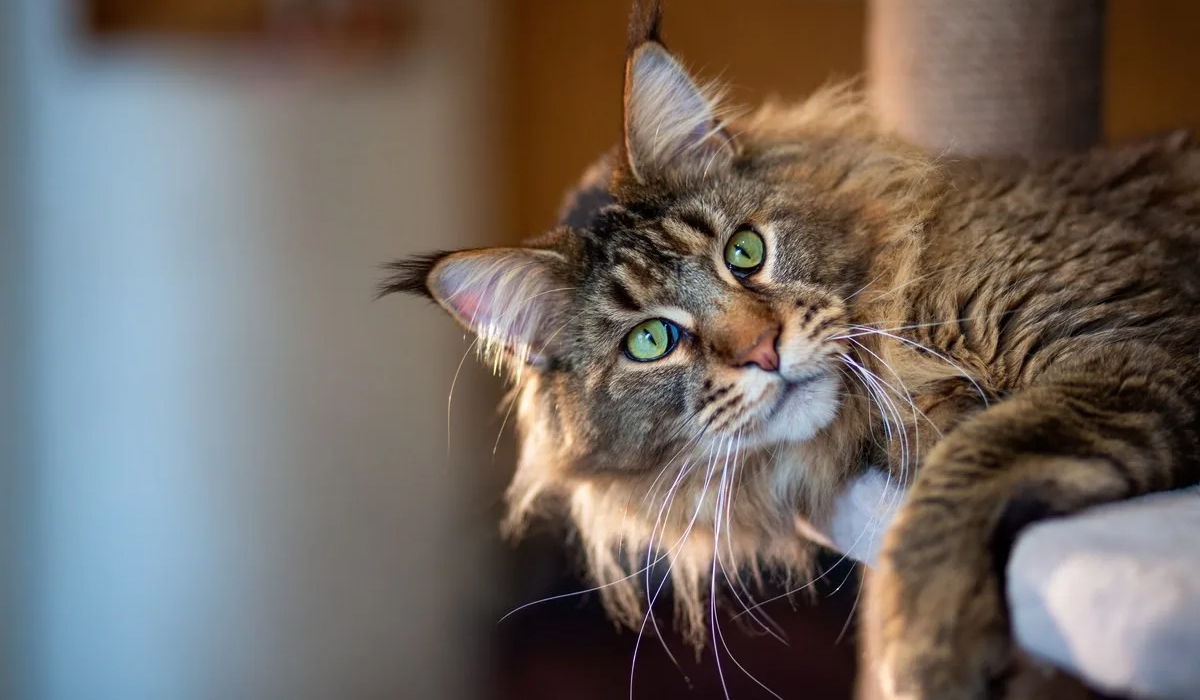
TICA Registered Maine Coon Kittens: What Buyers Should Know
If you’ve been searching for TICA registered Maine Coon kittens, you’ve probably noticed breeders highlighting that registration prominently on their websites. But what does TICA registration actually mean, practically speaking?
Does a TICA registered kitten come out automatically healthier? Does registration guarantee a certain temperament? Does it prove the breeder is legit?
The short answer to all three: no
TICA registration can give you genuinely useful information about a pedigreed cat’s documented lineage. But buyers need to understand exactly what registration does and doesn’t tell them before choosing a kitten based on it.
The International Cat Association (TICA) recognizes Maine Coon as an established breed and maintains registration and pedigree records for pedigreed cats. It also offers resources for people specifically looking to buy pedigree kittens.
For a buyer, the real value here is understanding how to use that registration information as one piece of a much larger evaluation, not the whole picture.
What TICA Registration Actually Means?
TICA registration simply means the cat is recorded in TICA’s system according to whatever registration requirements applied to it.
Depending on how the cat was registered, the paperwork can include a TICA Breeder Slip, pedigree information, proof of ownership, or other required documents. TICA explains that individual registration can happen through a breeder slip, a certified pedigree from an approved registry, or other qualifying pedigree documentation.
For a Maine Coon buyer, this gives you useful insight into the cat’s documented lineage. A registered pedigree can help answer things like:
- Who are the kitten’s parents?
- What’s the kitten’s registered name?
- What breed is it officially recorded as?
- Which ancestors show up in the pedigree?
- Is there actual documentation supporting all of this?
TICA’s current registration rules classify Maine Coon as a Category I established breed.
But it’s worth being clear-eyed here: registration is documentation of pedigree and registration status. It’s not a guarantee that every aspect of a kitten’s health or personality has been independently verified by anyone.
Does Registration Guarantee a Healthy Kitten?
No. TICA registration on its own does not guarantee a Maine Coon kitten is healthy. This might be the single most important thing for buyers to really internalize.
A kitten can have full registration documentation and still need the exact same careful health evaluation you’d expect to do with any kitten, from any breeder. When evaluating a kitten, ask directly about:
- Veterinary exams
- Vaccination records
- Parasite prevention
- Genetic testing
- Health history of the parents
- HCM screening
- Hip screening
- Any known health issues in the lines
- Whether there’s a health guarantee written into the contract
TICA’s own Maine Coon breed information flags hypertrophic cardiomyopathy (HCM) as a significant health concern, and discusses genetic DNA testing alongside periodic echocardiograms read by a board-certified veterinary cardiologist as part of responsible breeding.
That’s exactly why “TICA registered” should never be your only health check. Ask for the actual health information instead of the registration paperwork isn’t a substitute for it.
Does Registration Guarantee Temperament?
No, it doesn’t — and this is another misconception worth clearing up directly.
TICA describes Maine Coons in general as sweet-tempered, gentle, and friendly, with a reputation for being playful and sociable. But none of that comes from the registration paperwork itself.
A kitten’s actual temperament comes down to genetics, early experiences, socialization, environment, and how it’s been handled registration has nothing to do with any of that.
Two Maine Coon kittens from the exact same litter can turn out completely different personality-wise. One might be:
- Very outgoing
- Endlessly curious
- Totally at ease with strangers
While its littermate might be:
- More reserved
- Quieter
- Slower to warm up to new people
Both can be perfectly healthy, well-bred Maine Coon kittens; the personality difference doesn’t reflect quality or health at all.
This is exactly why it’s worth asking a breeder how their kittens are raised and socialized, rather than just assuming TICA registration comes with a guaranteed personality attached.
What’s an Actual Pedigree Worth?
For buyers who specifically want a pedigreed Maine Coon, the pedigree document itself can be genuinely important.
TICA explains that certain registration routes require pedigree info spanning multiple generations. Its individual registration guidelines describe pedigrees covering at least three generations, including names, registration numbers, and colors and patterns for each ancestor listed.
So a pedigree gives you real insight into a kitten’s documented ancestry which matters a lot if you’re buying specifically because you want a genuinely pedigreed Maine Coon, not just a cat that happens to look the part.
Worth asking the breeder directly: “Will I actually receive the appropriate TICA registration or pedigree documentation for my kitten?” Also ask when you’ll get it, and whether the registration will actually be transferred into your name.
TICA’s rules do provide for the transfer of registered ownership, and its guidance explains that breeders typically hand over the appropriate breeder slip or registration certificate, along with signed transfer documentation, at the time of transfer unless there’s a separate written agreement saying otherwise.
What to Actually Check if a Breeder Advertises TICA Registration
If a breeder is advertising TICA registered Maine Coon kittens, don’t stop at that claim alone. Treat it as the opening line of a much deeper conversation.
- Ask for the registration information: What documentation will actually come with the kitten?
- Ask about the pedigree: Is there a documented pedigree, and how many generations does it cover?
- Ask about the parents: Learn about the sire and dam, their health, temperament, and breeding history.
- Ask about health testing separately: Don’t conflate registration with health screening; they’re not the same thing. Ask exactly what testing has actually been done.
- Ask about veterinary care: Has the kitten had a vet exam, and what vaccinations or preventive treatments has it received so far?
- Ask about socialization: How do kittens interact with people and their everyday environment?
- Read the contract, fully: Understand the purchase agreement before you put down a deposit or the final balance.
These questions give you far more to work with than a registration badge ever could on its own.
Using TICA Registration to Research a Breeder
TICA maintains a breeder search and breeder listings for prospective owners to use as a starting point.
TICA states that its listings include member breeders who’ve signed the TICA Code of Ethics. But it’s also explicit that being listed doesn’t mean TICA is endorsing or guaranteeing that breeder’s business or breeding practices that distinction really matters.
You can absolutely use TICA as one research resource, while still doing your own independent legwork on top of it.
When comparing breeders, weigh:
| What to Check | Why It Matters |
| TICA registration | Documents pedigree and registration status |
| Health records | Shows actual veterinary care received |
| Parent health testing | Tells you about the breeding program itself |
| HCM screening | A key Maine Coon health consideration |
| Socialization | Reflects the kitten’s early experiences |
| Contract | Sets out buyer and breeder responsibilities |
| Health guarantee | Explains the breeder’s stated protections |
| Kitten age | Helps confirm appropriate timing for placement |
| Communication | Reflects how transparent the breeder actually is |
Put together, that gives you a much fuller picture than registration status alone ever could.
Questions Worth Asking a TICA-Affiliated Breeder
Before buying, it’s worth working through a list like this.
On registration:
- Is this kitten actually registered with TICA?
- Will I receive a TICA registration document?
- Will ownership be transferred into my name?
- Is a pedigree available?
- Can I see information on the kitten’s parents?
On health:
- Has the kitten been examined by a vet?
- What vaccinations has it received?
- Has parasite prevention been given?
- What genetic testing has been done on the parents?
- What HCM screening has been performed?
- Has hip screening been done?
On temperament:
- How is the kitten being socialized?
- How does it respond to new people?
- Has it been exposed to normal household activity?
- How would you personally describe this kitten’s personality?
On the purchase:
- What’s included in the contract?
- What does the health guarantee cover?
- What happens if a health issue shows up later?
- What food is the kitten currently eating?
- What support is available once the kitten’s home?
Working through this list genuinely helps you make a much more informed decision than relying on a registration claim alone.
Registration vs. Health Testing: Don’t Mix These Up
It’s genuinely easy to conflate these two things, but they serve completely different purposes.
TICA registration relates to the cat’s status and pedigree within TICA’s own system. Health testing is about actually evaluating the health of breeding cats and their kittens.
Think of it this way: registration tells you about documented pedigree and registration status. Health records tell you about veterinary care and actual testing that’s been done. You genuinely want both pieces of the picture, not just one.
A breeder who hands over solid registration paperwork but can’t clearly explain their health practices should prompt more questions, not fewer. And any health claims should be backed by real records, not vague reassurance.
What Registration Doesn’t Tell You
A TICA registration document doesn’t tell you everything about a kitten not even close. It won’t tell you:
- How well the kitten was actually socialized
- Whether it’ll grow into a specific personality
- Whether this particular breeder is the right fit for you
- Whether the kitten has actually received appropriate veterinary care
- Whether the parents have gone through every health screening you’d want
- How the kitten was raised day to day
- How much support the breeder will offer you after the sale
This is exactly why responsible buyers look at the entire breeding program, not just the paperwork. TICA itself encourages prospective buyers to do their own independent research when choosing a breeder, it’s not just good advice, it’s literally what the organization recommends.
Choosing a TICA Registered Kitten From Bella Dolce
If you’re researching TICA registered Maine Coon kittens and considering Bella Dolce, a good starting point is simply learning more about the cats and kittens available through the cattery.
Visit our TICA Registered Maine Coon Kittens and Cats page to see how TICA registration fits into how Bella Dolce presents its program. You’re also welcome to meet our Maine Coon cats to get a fuller sense of the cattery itself.
If you’re specifically kitten-hunting right now, take a look at our available Maine Coon kittens and review the information provided before reaching out. And for families who are already fairly serious about a purchase, our purchase and delivery information page walks through the next steps.
Is a TICA Registered Kitten Worth Considering?
If you specifically want a pedigreed Maine Coon, TICA registration can be a genuinely valuable part of the documentation you receive with your kitten.
But don’t base your decision on registration alone, look at the entire picture instead.
What a responsible buyer should actually be looking for is: documented pedigree, plus appropriate health information, plus responsible kitten care, plus a clear contract, plus transparent communication from the breeder.
That combination means a lot more than a registration label sitting by itself.
Final Thoughts
For buyers researching TICA registered Maine Coon kittens, registration is genuinely useful; it gives you documented pedigree and registration information you can actually verify.
But it should only be one part of your overall decision, not the deciding factor.
Don’t assume TICA registration automatically means a kitten is healthy, perfectly socialized, or guaranteed to have a particular personality; none of that follows from the paperwork alone.
Instead, ask the real questions. Review the pedigree. Request actual health information. Ask about the parents in detail. Understand what HCM screening and other relevant health practices actually look like for this breeder. Learn how the kittens are being socialized. Read the entire contract. Confirm exactly what registration documentation you’ll walk away with.
The goal was never simply to find a TICA registered Maine Coon kitten. The goal is finding a genuinely well-cared-for kitten from a transparent, responsible breeding program.
Use TICA registration as one valuable piece of the puzzle not as a substitute for doing the rest of your homework.
FAQ
What does TICA registration mean for a Maine Coon kitten?
It means the cat is recorded in TICA’s registration system according to whatever requirements are applied. Depending on the registration method used, documentation can include a breeder slip, a pedigree, and proof of ownership.
Are TICA registered Maine Coon kittens healthier than unregistered ones?
Not necessarily registration doesn’t automatically guarantee health. Buyers should still review veterinary records and ask directly about health testing on the parents, including relevant concerns like HCM.
Does TICA registration guarantee a certain temperament?
No. TICA describes the breed generally as gentle and friendly, but an individual kitten’s actual temperament is shaped by genetics, socialization, and environment registration paperwork has no bearing on personality.
What documents should come with a TICA registered Maine Coon kitten?
Ask the breeder exactly what registration and pedigree documentation will be provided, and how ownership transfer will actually work. TICA’s rules describe breeder slips, registration certificates, and ownership-transfer paperwork as part of this process.
How can I verify a TICA-affiliated breeder is legitimate?
Use TICA’s breeder resources as one starting point, then independently evaluate the breeder’s health practices, kitten care, contract, communication, and documentation yourself. TICA is explicit that its breeder listings aren’t an endorsement or guarantee of any particular breeder.
Also Read: TICA Membership for Maine Coon Breeders