

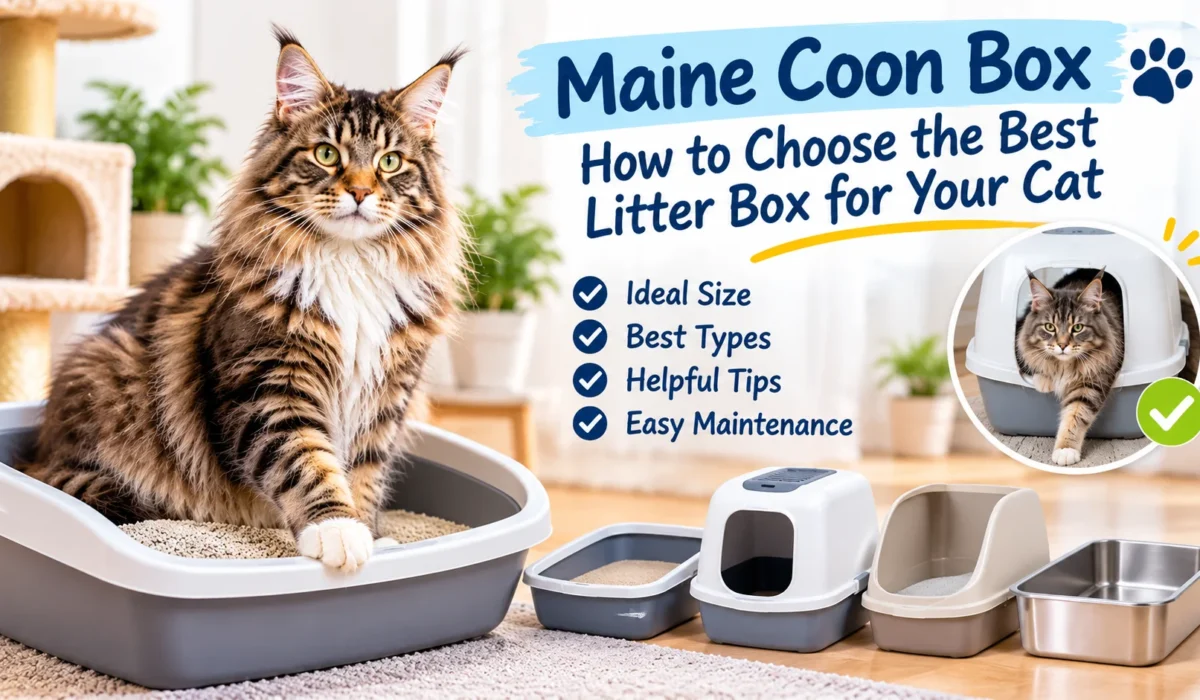
Maine Coon Box: How to Choose the Right Litter Box for Cats
Maine Coons are among the largest domestic cat breeds. Their impressive size, long bodies, and fluffy coats make them wonderful companions. However, their size also creates a practical challenge for owners: finding a litter box that gives them enough room to use comfortably.
A regular litter box designed for an average-sized cat may feel cramped for a fully grown Maine Coon. Your cat needs enough space to enter, turn around, dig, urinate, and cover its waste without hitting the sides.
Choosing the right Maine Coon box can make a noticeable difference in your cat’s comfort and bathroom habits. It can also help reduce litter tracking, mess, and litter box avoidance.
In this guide, we will explain how to choose the best litter box for Maine Coon cats, what dimensions to look for, which designs work well, and how to maintain a clean bathroom area.
Why Does a Maine Coon Need a Special Litter Box?
Maine Coons cats have longer bodies and larger frames than many domestic cats. A standard litter box may not provide enough room for them to move naturally.
Imagine trying to use a bathroom where you cannot comfortably turn around. Your cat may experience a similar problem when its litter box is too small.
An unsuitable box can contribute to:
- Waste landing outside the litter box.
- Litter being scattered across the floor.
- Difficulty turning around or digging.
- Discomfort when entering or exiting.
- Avoidance of the litter box.
The American Association of Feline Practitioners and International Society of Feline Medicine recommend choosing a litter box approximately 1.5 times the cat’s body length, measured from the nose to the base of the tail.
This makes size one of the most important features when choosing a Maine Coon litter box.
What Is the Best Size for a Maine Coon Box?
The best litter box size depends on your individual cat rather than a fixed breed measurement.
A useful guideline is:
Litter box interior length = Cat’s body length × 1.5
For example:
| Maine Coon body length | Suggested interior box length |
| 16 inches | 24 inches |
| 18 inches | 27 inches |
| 20 inches | 30 inches |
| 22 inches | 33 inches |
These are examples based on the recommended sizing formula, not standard measurements for every Maine Coon.
Measure Your Cat Before Buying
Measure your cat from the tip of the nose to the base of the tail. Do not include the tail itself. Multiply that measurement by 1.5 to estimate the preferred interior length.
Also consider the width. Your cat should be able to turn around and dig without constantly touching the sides.
Important buying tip: Check the usable interior dimensions rather than relying only on the advertised exterior measurements. Thick walls, curved corners, and molded edges can reduce the actual space available.
7 Best Types of Maine Coon Litter Boxes
Not every cat prefers the same design. Some Maine Coons like open trays, while others may be comfortable with covered boxes.
Here are seven practical options to consider.
1. Extra-Large Open Litter Box
An extra-large open box is one of the best starting choices for adult Maine Coons. It offers plenty of room to move and makes it easy for your cat to see its surroundings.
Benefits:
- More room for large bodies.
- Easy access.
- Good visibility.
- Simple cleaning.
- Less feeling of confinement.
The main disadvantage is that litter can scatter outside the tray, particularly if your cat enjoys enthusiastic digging.
For many owners, an extra-large open box provides the best balance between comfort and convenience.
2. High-Sided Litter Box
Some cats kick litter around while digging. Others raise their hindquarters when urinating, which can cause waste to land against the sides.
A high-sided litter box can help contain these messes. However, high walls should not make entry difficult.
Look for a design that combines:
- High side and rear walls.
- A comfortable entrance.
- Enough interior floor space.
- Smooth surfaces for cleaning.
This is particularly useful for large Maine Coons that scatter litter during bathroom visits.
3. Large Storage Container Litter Box
A large plastic storage container can be an affordable alternative to commercial litter boxes. Some containers offer more interior room than standard pet-store trays.
Choose a sturdy container with sufficient length and width. If the sides are too high, a low entrance may be necessary.
Make sure any cut opening has smooth, rounded edges without sharp plastic. Remove the lid and avoid creating enclosed spaces that trap odors.
This option can be especially useful when you cannot find a manufactured box large enough for your cat.
4. Stainless Steel Litter Box
Stainless steel litter boxes are popular with owners looking for a durable and easy-to-clean surface. Compared with scratched plastic, a smooth stainless steel surface can be easier to maintain.
Potential advantages include:
- Durable construction.
- Less odor retention than heavily scratched plastic.
- Easy cleaning.
- A sturdy design.
Before purchasing, confirm that the tray is genuinely large enough for your Maine Coon. Some stainless steel products advertised as XL may still have limited floor space.
5. Covered Litter Box
A covered litter box has a lid or enclosure that provides some privacy. It may also help contain scattered litter.
However, not every cat enjoys an enclosed bathroom. A covered design can restrict movement and allow odors to build up.
For a large Maine Coon, check the entrance and interior dimensions carefully. A cat should be able to walk in, turn comfortably, and leave without squeezing through a narrow opening.
When introducing a covered box, monitor whether your cat uses it comfortably. An uncovered alternative should remain available during the transition.
6. Top-Entry Litter Box
Top-entry litter boxes are designed with an opening on the roof. They can help reduce litter tracking because cats must climb out through the top. However, this design is not suitable for every Maine Coon.
Large cats may find the opening restrictive. Kittens, senior cats, and cats with joint or mobility problems may also struggle to climb in and out. For most Maine Coon households, an accessible open-top design is a safer starting point.
7. Self-Cleaning Litter Box
A self cleaning litter box for Maine Coon cat owners can seem like an attractive option because it reduces the need for manual scooping.
These products automatically separate waste or move litter through a cleaning mechanism. However, convenience should never come before comfort and safety.
Before buying one, check:
- Maximum supported cat weight.
- Minimum supported weight and age.
- Interior dimensions.
- Entrance opening.
- Cleaning cycle settings.
- Noise levels.
- Safety sensors.
- Manufacturer maintenance instructions.
Some automatic models are too small for a large adult Maine Coon. The 2026 Hill’s and International Cat Care kitten-care report also caution against automated trays for kittens because movement and noise may frighten them and some units are designed for cats above a minimum weight.
A self-cleaning model is worth considering only when your cat fits comfortably, meets the manufacturer’s requirements, and willingly uses it.
Keep a traditional litter box available while introducing an automatic model. If your cat avoids the new box, return to the familiar design.
What Is the Best Cat Litter for a Maine Coon?
Choosing the right tray is only half the job. The litter inside it matters too. Many cats prefer unscented litter with a relatively fine texture because it feels more natural under their paws.
Here are some common options.
- Clumping clay litter: Forms removable clumps when wet. It is convenient for daily scooping and widely available.
- Lightweight litter: Easier to carry and pour, although some varieties produce more dust or track around the house.
- Silica crystal litter: Absorbs moisture and can help control odor. However, some cats dislike the texture.
- Paper-based litter: Can be useful for cats that prefer softer or alternative textures. Some cats may not like the larger pellets.
- Plant-based litter: Made from materials such as corn, wheat, or wood. Texture and absorption differ between products.
Start with the litter your kitten already uses when bringing it home. A sudden change in texture or smell may cause avoidance.
How Deep Should the Litter Be?
The ASPCA notes that many cats prefer approximately 1–2 inches of litter.
Start with this range and adjust according to your cat’s preferences and the litter manufacturer’s instructions.
Avoid adding strong fragrances or deodorizers. Cats have sensitive noses, and a heavily scented tray may discourage use.
How Many Litter Boxes Does a Maine Coon Need?
A common recommendation is to provide one litter box per cat plus one extra.
For example:
| Number of cats | Recommended litter boxes |
| 1 cat | 2 |
| 2 cats | 3 |
| 3 cats | 4 |
| 4 cats | 5 |
The boxes should be placed in separate, accessible locations rather than grouped together.
This gives cats more choices and helps prevent one animal from blocking access to the bathroom area.
For a single Maine Coon, having two boxes can be helpful even when the cat is comfortable sharing the same general area.
Where Should You Place a Maine Coon Box?
Location can influence whether your cat uses its litter box consistently. Choose a quiet location where your cat can enter and leave without feeling trapped.
Good locations include:
- A quiet laundry area away from noisy appliances.
- A spare bathroom.
- A dedicated pet-care area.
- A peaceful corner with easy access.
Avoid placing litter boxes next to food and water bowls. Also avoid locations where doors frequently close or other pets can block access. In a multilevel home, consider providing a litter box on each floor.
How Often Should You Clean a Maine Coon Litter Box?
Large cats can produce noticeable amounts of waste, so regular cleaning is important.
A practical maintenance routine includes:
- Daily: Scoop urine clumps and solid waste at least once daily. More frequent scooping may be necessary in a busy multi-cat home.
- Weekly: Thoroughly clean the tray and replace litter as appropriate for the litter type. The 2026 Hill’s and International Cat Care kitten-care report recommends daily scooping for clumping litter and thorough cleaning at least weekly.
- Regularly: Inspect the box for scratches, cracks, odors, and damaged surfaces.
Use mild cleaning products and rinse thoroughly. Avoid strong chemicals and fragrances that may leave irritating residues.
How to Get a Maine Coon to Use a New Litter Box?
Some Maine Coons adapt immediately to a new litter box. Others need time.
Try these steps:
- Place the new box near the familiar bathroom area.
- Use the same litter your cat already knows.
- Keep the entrance easy to access.
- Let your cat explore without forcing it inside.
- Keep the old box available during the transition.
- Observe whether your cat is digging, turning, and covering comfortably.
Avoid punishment when accidents happen. If your Maine Coon suddenly stops using its litter box, do not assume it is simply being stubborn.
A cat that strains to urinate, repeatedly visits the box but produces little or no urine, or appears distressed needs urgent veterinary attention. A urinary blockage is a life-threatening emergency, particularly in male cats.
A Comfortable Home for Your Maine Coon
A good litter box is an important part of preparing a home for a Maine Coon. These cats need more than a large bathroom area.
They also benefit from regular grooming, balanced nutrition, interactive play, scratching opportunities, and comfortable resting spaces.
At Bella Dolce Maine Coon, we believe responsible ownership begins with understanding the everyday needs of this wonderful breed.
Families preparing to welcome a kitten can explore our Maine Coon kittens page. For more guidance on daily care, read our complete guide to raising a Maine Coon kitten.
You can also explore our Maine Coon grooming, feeding, and health care guide for practical advice on maintaining a healthy coat and daily routine.
Final Thoughts
Choosing the right Maine Coon box is about giving your cat enough space, easy access, and a comfortable place to eliminate.
For most owners, an extra-large rectangular tray is the best starting point. Look beyond the words “large” or “XXL” and measure the interior floor space. Choose an appropriate entrance, use litter your cat accepts, provide enough boxes, and maintain a consistent cleaning routine.
Most importantly, pay attention to your cat’s behavior. A Maine Coon that can enter, turn, dig, and leave comfortably is more likely to develop consistent bathroom habits. A little planning can make litter box care easier for both you and your cat.
FAQ
What is the best litter box for a Maine Coon?
An extra-large rectangular open litter box is a good starting choice for most adult Maine Coons. Choose one with enough interior space to turn around and dig comfortably. High sides can help reduce litter scatter while a low entrance makes access easier.
Do Maine Coons need an extra-large litter box?
Yes, most adult Maine Coons benefit from a larger-than-average litter box. A useful guideline is to choose a box approximately 1.5 times the cat’s body length, measured from nose to tail base.
Can a Maine Coon use a self-cleaning litter box?
Some Maine Coons can use automatic litter boxes, but the model must accommodate their weight and body size. Check the manufacturer’s minimum and maximum weight requirements, interior dimensions, and entrance size. Keep a traditional box available during the transition.
Why is my Maine Coon pooping outside the litter box?
Possible reasons include a small or dirty litter box, an unsuitable litter texture, stress, difficulty accessing the tray, constipation, or another medical problem. A sudden change in bathroom habits should be discussed with your veterinarian.
Also Read: Maine Coon Losing Hair