

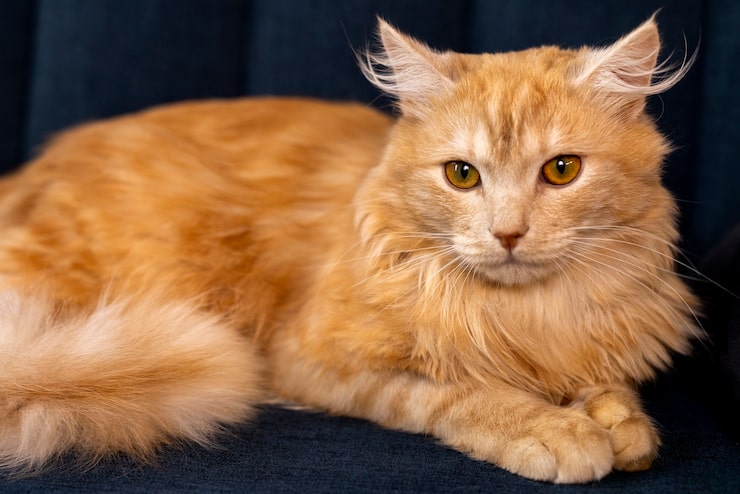
Reputable Maine Coon Breeder in Washington State | Guide
Finding a genuinely reputable Maine Coon breeder in Washington State takes more effort than Googling around, browsing kitten photos, and picking whichever cattery happens to have availability first.
A responsible breeder should be upfront about the cats they breed, their health-testing practices, how kittens are raised, registration status, contracts, and what actually happens once you bring a kitten home.
This matters more than people expect, because not every website advertising Maine Coon kittens reflects the same level of breeding practice. Some breeders will hand you extensive health documentation and ongoing support without you even asking twice. Others offer barely any documentation at all and push you toward paying fast.
The good news is you can actually compare breeders side by side, systematically, instead of just going with your gut.
This guide covers how to find a reputable Maine Coon breeder in Washington State, what to ask, which health info is worth reviewing, how registration factors into your decision, and which warning signs deserve real attention.
What Actually Makes a Breeder Reputable?
A reputable breeder should be genuinely willing to walk you through how their breeding program works.
That doesn’t mean every responsible breeder operates identically, small home catteries and larger programs both exist, and both can be excellent. But transparency should be a constant, no matter the size.
When comparing breeders, look for someone who can clearly speak to:
- The cats in their breeding program
- Health screening
- Veterinary care
- Genetic testing, where relevant
- Kitten socialization
- Vaccination and parasite prevention
- Registration and pedigree info
- Contracts and health guarantees
- When kittens are actually ready to leave
- Transportation and delivery
- Support after the kitten goes home
TICA’s buyer guidance recommends researching breeders carefully, requesting health and genetic records, understanding the sales agreement fully, and verifying whatever you’re told before you commit to a kitten.
A genuinely reputable breeder should also be entirely comfortable fielding your questions in fact, expect them.
Building Your Shortlist
Start with a shortlist rather than jumping straight to one breeder.
Search for Maine Coon breeders across Washington State, and go through each one’s website and any available information. Then compare them all using the same set of criteria, rather than judging each one in isolation.
Worth checking for each breeder:
- Transparency: Can you actually find clear, specific information about the breeder, the cats, and the kittens?
- Health information: Does the breeder explain their health screening and back it up with actual records?
- Parent information: Can you learn anything meaningful about the kitten’s sire and dam?
- Kitten care: Does the breeder explain how their kittens are raised and socialized?
- A clear purchasing process: Are deposits, contracts, transportation, and health guarantees all explained clearly upfront?
- Communication: Can you actually talk to the breeder and get direct answers, not vague deflections?
- Long-term responsibility: Does the breeder address what happens if circumstances change for you down the road?
Don’t judge purely off a website. A polished, professional-looking site is nice, but it’s genuinely not proof of responsible breeding on its own.
Questions Worth Asking Every Breeder?
One of the easiest ways to actually compare breeders is asking each one the same set of questions, it makes the differences between breeding programs jump out much faster.
About the Parents
- Can I see the kitten’s parents?
- Where do the parents actually live?
- Can I learn about their health history?
- What health screening has been done on them?
- What are their temperaments like?
- Are pedigree or registration records available?
TICA recommends asking to see the parents in person, or over video if a visit isn’t realistic.
About the Kitten Itself
- How old will the kitten be when it goes home?
- Has it been examined by a vet?
- Which vaccinations has it received?
- Has parasite prevention been provided?
- What food is it currently eating?
- How has it been socialized?
- What documentation comes with it?
About the Breeder Themselves
- How long have you been breeding Maine Coons?
- What health testing do you actually perform?
- How do you select which cats to breed?
- What does your contract cover?
- What does your health guarantee actually include?
- What support is available after purchase?
A breeder who’s willing to walk through all of this openly gives you a lot more to actually evaluate than one who just says “trust me.”
Health Testing Belongs at the Center of Your Comparison
Health should be one of the biggest factors when you’re comparing Maine Coon breeders side by side.
Skip the vague version of this question “are your cats healthy?” is too broad to be useful. Ask instead what specific health screening is performed, and whether there’s actual documentation to back it up.
TICA identifies several health considerations relevant to Maine Coons, including hypertrophic cardiomyopathy (HCM), hip dysplasia, luxating patella, spinal muscular atrophy (SMA), and pyruvate kinase deficiency.
The exact screening program varies from breeder to breeder. What matters most is whether the breeder genuinely understands these breed-related risks and can explain their own approach clearly.
Ask Specifically About HCM Screening
Hypertrophic cardiomyopathy HCM is one of the more significant health concerns for this breed.
TICA recommends that responsible Maine Coon breeders combine genetic testing with periodic echocardiograms, evaluated by a board-certified veterinary cardiologist. That’s a meaningful distinction for buyers to understand: a DNA test and an echocardiogram are not interchangeable; they check for different things entirely.
When comparing breeders, ask directly: “What HCM screening do you perform on your breeding cats?” Then ask if they can walk you through the results and show you documentation.
Steer clear of breeders who make sweeping claims like “our cats can never develop HCM.” No responsible breeder can honestly promise that. The real goal here is responsible risk management paired with genuine transparency — not empty guarantees.
Ask About Genetic Testing Specifically
It’s also worth asking which genetic tests are actually run on breeding cats.
TICA’s Maine Coon breed information touches on genetic testing for conditions including HCM, SMA, and pyruvate kinase deficiency.
Worth asking:
- What tests have actually been performed?
- Which specific cats were tested?
- What were the results?
- Can I see the documentation myself?
- How do the results shape your breeding decisions?
What actually matters here is understanding exactly what the breeder tests for, rather than accepting a vague “the cats are genetically healthy” and moving on.
Ask About Hip and Orthopedic Screening
Maine Coons are a large breed, so orthopedic health deserves a spot in the conversation too.
TICA notes that Maine Coons can be susceptible to hip dysplasia, and that many breeders screen their cats using appropriate imaging methods. Luxating patella comes up as another relevant consideration.
Ask directly: “Do you screen your breeding cats for hip dysplasia or other orthopedic issues?” Then follow up on what type of screening is used and whether records exist.
You don’t need to become a veterinary expert here. You just need enough information to genuinely compare how different breeders approach health.
What Registration Actually Tells You?
Registration can be a genuinely useful piece of evaluating a pedigreed Maine Coon breeder, but it shouldn’t be the only thing you weigh.
If a breeder claims TICA registration or membership, verify that independently rather than taking it at face value. TICA does offer resources for prospective owners along with breeder listings, but the organization itself is clear that buyers should still do their own due diligence — being listed isn’t the same as an endorsement of a breeder’s actual business practices.
That distinction genuinely matters. Registration is one data point among several. Health practices, transparency, how kittens are cared for, the contract, and how the breeder communicates all carry real weight too.
You can learn more about Bella Dolce’s own registration information on our TICA-registered Maine Coon kittens and cats page.
Read the Contract Before You Pay Anything
A written contract is a genuinely important part of buying a Maine Coon kitten. Don’t wait until after you’ve already handed over a deposit to actually read it.
Ask for the contract in advance and go through:
- Purchase price
- Deposit terms
- Health guarantee
- Veterinary requirements
- Vaccination requirements
- Registration conditions
- Spay/neuter requirements, if applicable
- Return policy
- Rehoming requirements
- Who handles transportation
- The buyer’s responsibilities
- The breeder’s responsibilities
TICA recommends buyers fully understand the written sales agreement and health guarantee before completing a purchase.
If any clause is unclear, ask about it directly. A genuinely reputable breeder should have no problem explaining it in plain language.
Comparing Breeders Head to Head
Don’t compare breeders purely on kitten price; that’s genuinely one of the least reliable signals here. A simple side-by-side comparison works a lot better.
| Factor | Breeder A | Breeder B | Breeder C |
| Health records | ✓ | ? | ✓ |
| HCM screening explained | ✓ | ? | ✓ |
| Genetic testing | ✓ | ? | ? |
| Parent information | ✓ | ✓ | ? |
| Kitten socialization | ✓ | ? | ✓ |
| Written contract | ✓ | ✓ | ? |
| Health guarantee | ✓ | ? | ✓ |
| Registration information | ✓ | ? | ✓ |
| Transportation explained | ✓ | ✓ | ? |
| Post-purchase support | ✓ | ? | ✓ |
The point of a table like this isn’t to find whichever breeder racks up the most checkmarks. It’s to identify exactly where you still need more information before deciding.
Don’t Default to the Cheapest Kitten
Price is genuinely just one piece of the decision. A lower price doesn’t automatically mean a bad breeder, and a higher price doesn’t automatically mean a better one either.
Instead, compare what’s actually included with each option and how transparent each breeder is about their own practices.
Warning Signs Worth Taking Seriously
Knowing what makes a breeder reputable is one half of this. Knowing what should make you pause is just as important.
- They refuse to provide health information: You should be able to understand the kitten’s veterinary history and get relevant health info on the parents.
- They avoid questions about the parents: There should be some reasonable way for you to actually learn about them.
- They make unrealistic health claims: Be wary of any suggestion that their cats “can never” develop health problems — that’s simply not how biology works.
- There’s no written contract: A purchase this significant deserves clearly defined terms in writing.
- They push you to pay immediately: Urgency tends to short-circuit proper research, and that’s often the point.
- They want a suspicious payment method: TICA advises real caution around payment types commonly tied to scams, wire transfers and gift cards especially.
- The information doesn’t line up: If the website says one thing and the breeder tells you something else entirely, stop and dig into why.
- They won’t communicate directly: A breeder should offer some reasonable way to actually talk and get real answers.
One warning sign alone doesn’t automatically prove dishonesty. Several stacking up together, though, is a much stronger reason to reconsider.
Should You Visit a Breeder in Person?
If you’re able to visit, that visit can genuinely teach you a lot. Pay attention to:
- How the cats look overall
- Whether they seem well cared for
- How the kittens respond to people
- Whether the breeder answers your questions openly
- Whether the environment feels appropriate for raising kittens
That said, not every breeder is going to allow unrestricted home visits and that’s not automatically a red flag. There are legitimate reasons involving privacy and disease prevention that can factor in here.
If an in-person visit isn’t in the cards, ask whether the breeder can offer a live video call or some other reasonable way to actually see the cats and kittens. The goal is verification not necessarily setting foot inside someone’s home.
How Kittens Should Be Prepared for a New Home?
A genuinely reputable breeder should be able to walk you through exactly how their kittens get prepared for the move to a new family. Worth asking about:
- Socialization
- Handling
- Grooming
- Food
- Litter habits
- Veterinary care
- Vaccinations
- Parasite prevention
- Transportation
- The transition itself
Maine Coon kittens also grow into genuinely large adult cats, so it pays to think past the first few months. Before your kitten arrives, put together a safe space with the right food, water, litter, scratching surfaces, toys, and a secure carrier.
Finding Maine Coon Kittens at Bella Dolce
If you’re comparing reputable breeders across Washington State, take the time to actually research the breeding program before settling on a kitten.
At Bella Dolce Maine Coons, you’re welcome to view our available Maine Coon kittens and learn more about what’s currently on offer from the cattery. You can also check out our Maine Coon cats to learn more about the cats behind the program itself.
Before making any purchase decision, take a look at our purchase and delivery information so you understand the process, the responsibilities involved, and how transportation is handled.
These links are kept intentionally light here — the goal of this article is helping you actually evaluate breeders, not turning every section into a pitch.
A Simple Checklist Before You Commit
Before putting down a deposit, make sure you’ve genuinely thought through all of this.
Breeder
- Can I communicate with the breeder directly?
- Can I actually learn about the parents?
- Does the breeder answer questions clearly?
- Is the breeding program itself explained?
Health
- Are veterinary records actually available?
- What health screening is being done?
- Is HCM screening clearly explained?
- What genetic testing is performed?
- Is orthopedic health being considered?
The kitten
- How old will it be when it goes home?
- How has it been socialized?
- What vaccinations has it received?
- What parasite prevention has been given?
- What food is it currently eating?
The purchase
- Is there a written contract?
- Is the health guarantee clearly spelled out?
- Are the registration terms clear?
- Is transportation explained?
- What support is available afterward?
Warning signs
- Am I being pressured to pay?
- Are there unexplained fees showing up?
- Is the information inconsistent anywhere?
- Are health records unavailable?
- Does the breeder dodge reasonable questions?
If you can’t get answers you’re actually satisfied with, don’t rush. There are always more kittens, and more breeders, worth researching.
Final Thoughts
Finding a reputable Maine Coon breeder in Washington State should feel like a genuine research process, not a rushed purchase made at the moment.
Don’t pick a breeder simply because they happen to have a kitten ready right now. Compare the actual breeding program.
Ask about the parents. Review the health information carefully. Understand what their HCM and genetic screening actually looks like. Ask how the kittens are socialized. Verify any registration claims independently. Read the contract fully before paying anything. And make sure you understand transportation and what happens after the sale.
Most importantly don’t be afraid to walk away if something doesn’t sit right with you.
A genuinely responsible breeder understands exactly why prospective owners ask so many questions. Transparency isn’t a hassle to them. It’s simply part of helping you make an informed decision.
If you’re ready to start comparing available kittens, you can explore Bella Dolce Maine Coon kittens and review our purchase and delivery information before taking your next step.
The simplest way to find a reputable Maine Coon breeder really comes down to this: compare carefully, verify what matters, and choose transparency over pressure every time.
FAQ
How do I find a reputable Maine Coon breeder in Washington State?
Start by researching several breeders instead of jumping at the first available kitten. Compare their health testing, parent information, kitten care, contracts, registration claims, communication style, and post-purchase support. Verify anything important independently before paying a deposit.
What should I actually ask a Maine Coon breeder?
Ask about the kitten’s parents, veterinary records, vaccinations, parasite prevention, genetic testing, HCM screening, socialization, the kitten’s age, contract terms, health guarantee, registration, and transportation.
What health testing should a Maine Coon breeder be doing?
Programs vary from breeder to breeder, but TICA points to HCM, hip dysplasia, luxating patella, SMA, and pyruvate kinase deficiency as relevant considerations for the breed. TICA recommends combining genetic testing with periodic echocardiograms specifically for HCM.
Does TICA registration mean a breeder is automatically reputable?
Not on its own. Registration or membership can be one useful factor in your research, but weigh it alongside health practices, transparency, contracts, kitten care, and other real evidence of responsible breeding.
What are the biggest warning signs to watch for?
Missing health records, avoidance around discussing the parents, unrealistic health claims, no written contract, pressure to pay quickly, suspicious payment requests, and breeders who consistently dodge reasonable questions.
Also Read: Maine Coon vs Ragdoll