

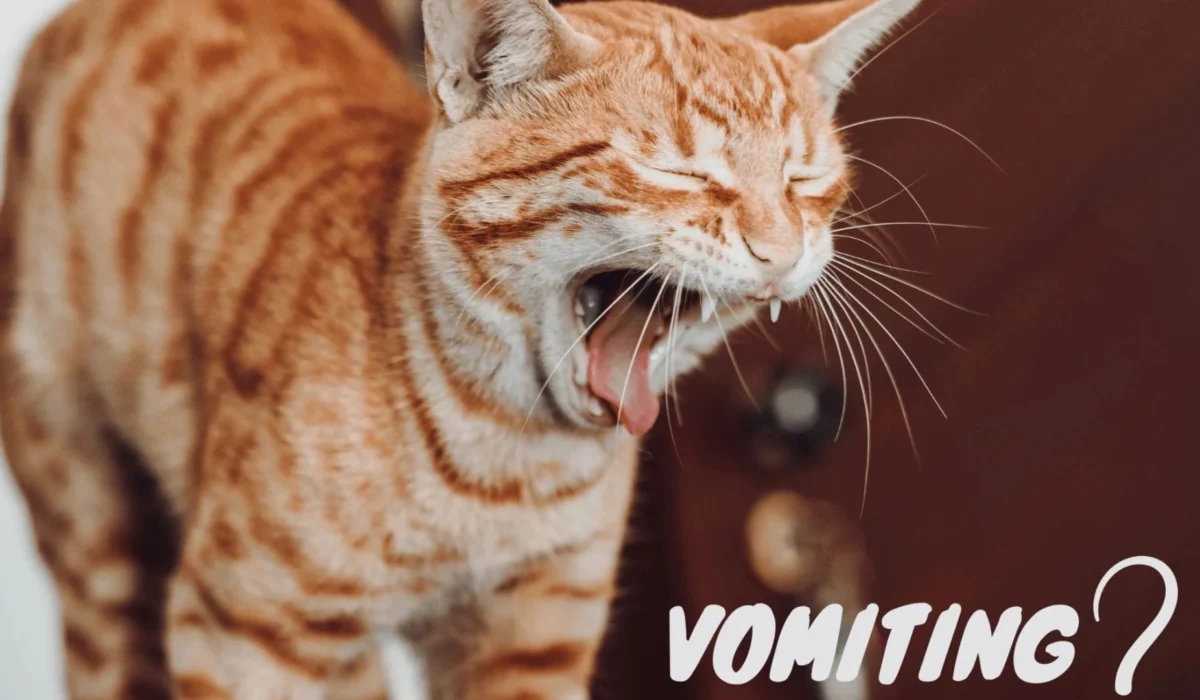
Cat Vomiting: Causes, Treatment, Warning Signs & What to Do
Seeing your cat suddenly vomiting can be alarming. One minute they are acting normal and the next you are cleaning up food, liquid, foam, or a hairball from the floor.
The good news is that one isolated episode doesn’t necessarily mean something serious. Cats do sometimes vomit due to a hairball, dietary upset or something irritating that they have swallowed. But repeated vomiting or vomiting with other symptoms could be a sign of an underlying medical issue.
Understanding cat vomiting can help you decide what to monitor at home and when your cat needs veterinary attention.
What Is Cat Vomiting?
Vomiting is an active, forceful expulsion of material from the stomach or upper small intestine. It often includes nausea, lip licking, swallowing, salivation, abdominal contractions and retching.
It is also important to understand that cat throwing up is not always true vomiting.
Regurgitation is more passive. It commonly happens soon after eating or drinking and usually occurs without strong abdominal contractions. Coughing can also produce foam or fluid and may be mistaken for vomiting. Taking a short video of the episode can help your veterinarian tell the difference.
What Are the Common Reasons for Cat Throwing Up?
There is no one reason for cat vomiting. It might be as simple as an upset stomach or something that needs to be seen right away.
Common causes include:
- Hairballs
- Eating too quickly
- Dietary changes or food intolerance
- Eating plants or inappropriate foods
- Intestinal parasites
- Gastrointestinal inflammation
- Infections
- Ingestion of toxins
- Foreign objects such as string or toys
- Pancreatitis
- Kidney or liver disease
- Hyperthyroidism
- Inflammatory bowel disease
- Certain cancers
Cornell Feline Health Center and Merck Veterinary Manual both note that vomiting can have digestive as well as non-digestive causes. This is why recurring vomiting should not automatically be blamed on hairballs.
1. Hairballs
Cats swallow loose hair when grooming themselves. Some of that hair passes through the digestive tract. Some cats periodically bring up a hairball.
Hairballs can be normal from time to time. But frequent hairball vomiting deserves attention. VCA advises contacting a veterinarian when hairballs occur more than about once a month, especially if the pattern has changed.
Long-haired breeds may need extra grooming because loose coats can increase the amount of hair swallowed.
2. Eating Too Quickly
Some cats eat so fast that they bring food back up shortly after a meal. This may actually be regurgitation rather than true vomiting.
If your cat repeatedly has this problem, smaller meals, slower-feeding methods, or a feeding setup recommended by your veterinarian may help.
3. Dietary Upset
A sudden food change, table scraps, spoiled food, grass, plants, or something found on the floor can irritate a cat’s digestive system.
Cats are naturally curious. A loose piece of string, rubber band, toy fragment, or household object can also become dangerous if swallowed.
Foreign-body obstruction is particularly important because it can lead to vomiting, loss of appetite, pain, dehydration, and potentially life-threatening complications.
What Does Cat Foamy Vomit Mean?
Cat foamy vomit may look white, clear, or slightly yellow. Foam can form when stomach fluid mixes with saliva and air.
Foamy material can occur with stomach irritation or an empty stomach. However, the appearance alone does not tell you the cause.
A key point is that cats can also cough up foam. VCA notes that coughing often involves a crouched posture with the neck stretched forward, while vomiting generally involves abdominal contractions and retching.
Pay attention to what happened before and after the episode.
Ask yourself:
- Did your cat eat recently?
- Was there food, hair, or only liquid?
- Was the material white, yellow, green, or bloody?
- Did your cat retch?
- Is your cat still interested in food and water?
- Is your cat acting normal afterward?
- Has vomiting happened more than once?
These details can help your veterinarian determine what may be happening.
Cat Vomiting: When Is It an Emergency?
Not every episode requires an emergency visit. But certain signs should never be ignored. If your pet is vomiting and has any of the following, get your pet to the vet immediately:
- Blood in vomit
- Severe tiredness or weakness
- Lack of appetite
- Abdominal pain
- Loose stools
- Fever
- loss of water
- Keep on vomiting.
- Gagging without output
- Walking or standing difficulty
- Suspected poisoning
- Suspected foreign body ingestion
VCA recommends calling for help right away if your vomit also includes any of the following: blood, stomach pain, signs of dehydration, lethargy, fever, diarrhea, or you suspect they may have ingested a toxin or foreign body.
Cornell also recommends prompt veterinary evaluation for cats that vomit more than once a week or show signs such as weakness, decreased appetite, blood in the vomit, abnormal thirst or urination, or diarrhea.
Cat Vomiting Treatment: What Does a Vet Do?
The correct cat vomiting treatment depends on the reason your cat is sick. A veterinarian may start with a physical examination and detailed history. Depending on the symptoms, testing can include:
- Blood tests
- Urine testing
- Fecal testing
- X-rays
- Ultrasound
- Endoscopy
- Additional specialized testing
The goal is to identify the underlying cause instead of simply stopping the vomiting.
For example, a cat with parasites may need parasite treatment. A cat with dehydration may need fluids. A cat with a foreign-body obstruction may require endoscopic or surgical removal. Cats with certain gastrointestinal or metabolic diseases may need dietary changes or specific medication.
Can Cat Vomiting Treatment at Home Help?
For a cat that has vomited once and is otherwise completely normal, careful observation may be reasonable.
VCA notes that many cases of acute vomiting improve within 24 hours when no other concerning signs are present.
Safe supportive steps may include:
Monitor your cat closely
Watch eating, drinking, energy level, urination, bowel movements, and whether vomiting happens again.
Keep fresh water available
Vomiting can contribute to dehydration. Water should not be routinely withheld unless your veterinarian specifically instructs you to do so.
Follow veterinary feeding instructions
Your veterinarian may recommend an easily digestible diet in small portions. Avoid giving your cat a variety of treats, table scraps, or new foods while the stomach is recovering.
Remove potential hazards
Check the home for string, yarn, rubber bands, plants, medications, chemicals, and small objects that your cat could swallow.
Never give human medication without veterinary advice
A medication that seems harmless to a person may be dangerous for a cat. VCA specifically advises against giving cats medications unless a veterinarian has instructed you to do so.
Do not try to make your cat vomit
This is especially important after suspected poisoning.
There are no safe over-the-counter products for inducing vomiting in cats at home, and substances such as hydrogen peroxide or salt can cause additional injury. Contact a veterinarian or animal poison-control service instead.
A Real-World Example: When One Episode Is Different From Repeated Vomiting
Imagine a healthy two-year-old Maine Coon that eats breakfast normally. Later that day, the cat vomited once. There is no blood. The cat returns to normal behavior, drinks water, wants to eat later, and continues playing.
That situation may be appropriate for close monitoring while watching for additional signs.
Now consider a different scenario.
The same cat vomits several times. It refuses food, hides under the bed, seems weak, and keeps retching without producing much.
That is a very different situation.
Repeated vomiting combined with appetite loss and lethargy could indicate something more serious and warrants veterinary evaluation rather than a home remedy.
Maine Coon Cats and Vomiting
Maine Coon cats have long coats, so grooming is an important part of their routine. Regular grooming can help remove loose hair before your cat swallows it.
For Bella Dolce Maine Coon owners, everyday wellness involves more than watching for illness. Nutrition, grooming, exercise, enrichment, and routine veterinary care all contribute to a healthy life.
Our Maine Coon grooming, feeding, and health care guide is a useful companion resource for owners building a regular care routine.
New owners can also review our Maine Coon kitten care guide for practical advice on feeding, grooming, socialization, play, and settling a kitten into a new home.
For families considering bringing home a Maine Coon, our Maine Coon kittens page provides more information about the kittens available from Bella Dolce.
How Can You Reduce the Risk of Vomiting?
You cannot prevent every episode of vomiting, but good daily habits can reduce avoidable problems.
Feed a complete and balanced diet that matches your cat’s life stage. Introduce food changes gradually unless your veterinarian gives different instructions.
Regular grooming is particularly helpful for long-haired cats. Keep small household objects out of reach and store human medications and cleaning products securely.
Be careful with plants. Some common household plants can cause serious poisoning in cats.
It is also useful to establish a simple health baseline for your cat. Knowing how much they normally eat, drink, play, groom, and use the litter box can make unusual changes easier to spot.
VCA recommends monitoring these everyday patterns when caring for a sick cat because cats often hide signs of illness.
What Information Should You Give Your Veterinarian?
When your cat is vomiting, useful details can make the veterinary assessment easier.
Write down:
- How many times your cat vomited
- When the vomiting started
- What the vomit looked like
- Whether food, hair, foam, or blood was present
- What your cat ate recently
- Any recent food changes
- Possible access to plants, medication, chemicals, or objects
- Changes in appetite or drinking
- Changes in urination or bowel movements
- Any unusual behavior
A video can also be extremely helpful when it is unclear whether your cat is vomiting, coughing, or regurgitating.
Final Thoughts
Cat vomiting can have a simple explanation or be an early sign of a more serious problem. The most important thing is to look at the whole picture rather than judging the situation only by the color or appearance of the vomit.
A single episode in an otherwise normal cat may be worth monitoring. Repeated vomiting, blood, appetite loss, weakness, pain, dehydration, or suspected poisoning or obstruction deserves veterinary attention.
For Maine Coon owners, regular grooming and a safe home environment can also help reduce some avoidable problems.
When in doubt, trust changes in your cat’s normal routine as a reason to pay closer attention. Early veterinary advice is often safer than trying to solve persistent vomiting with a home remedy.
FAQ
Is cat vomiting once normal?
An occasional episode can happen even in an otherwise healthy cat. If your cat quickly returns to normal and has no other concerning signs, your veterinarian may recommend monitoring. Repeated vomiting or additional symptoms require more attention.
Why is my cat throwing up white foam?
White or clear foam can occur when stomach fluid and saliva are expelled. However, foam is not a diagnosis. Coughing can also produce frothy material, so repeated or unexplained episodes should be discussed with your veterinarian.
How can I treat cat vomiting at home?
For a cat that vomits once and otherwise appears healthy, close monitoring and following veterinary feeding and hydration advice may be appropriate. Do not give human medications or attempt to induce vomiting at home. Persistent vomiting or additional signs need veterinary evaluation.
When should I take my cat to the vet for vomiting?
Contact a veterinarian promptly when vomiting is repeated or occurs with blood, weakness, lethargy, poor appetite, abdominal pain, diarrhea, fever, dehydration, or suspected poisoning or foreign-body ingestion. Emergency care is appropriate when the cat appears severely ill or has difficulty standing or walking.
Also Read: Cat Allergies