

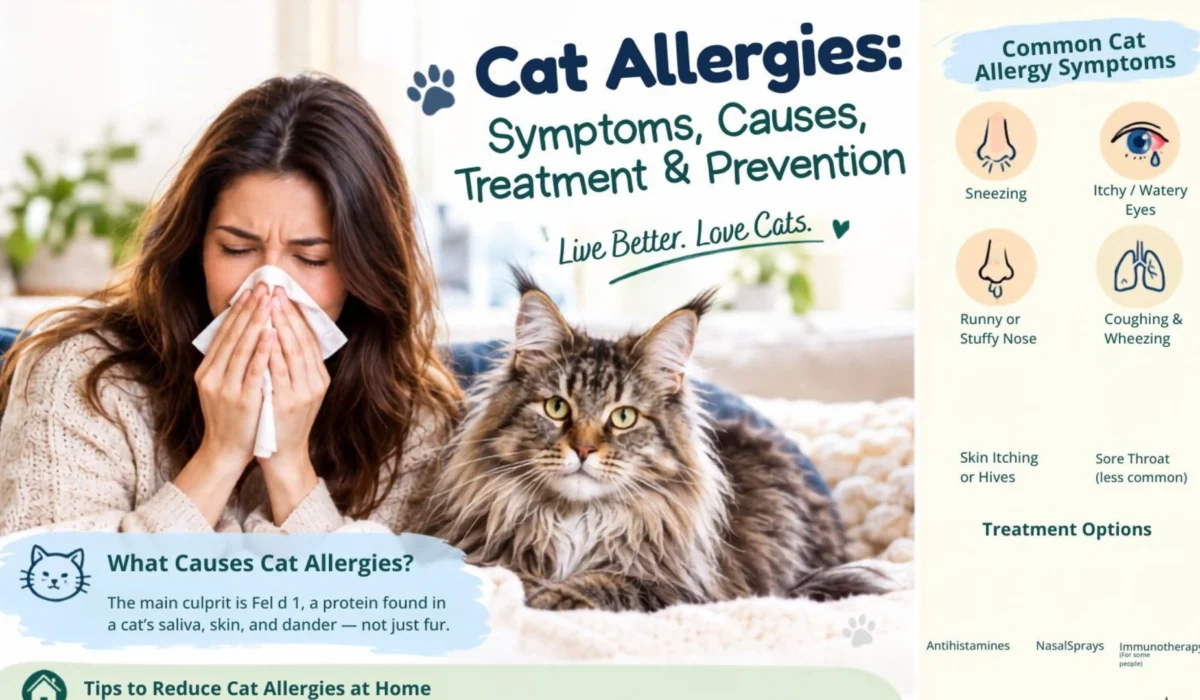
Cat Allergies : Symptoms, Causes, Treatment and Prevention
For many cat lovers, there is an uncomfortable question that comes up before bringing a new kitten home: Can you have a cat if you have allergies?
The answer is sometimes yes, but it depends on what is causing your reaction and how sensitive you are to the allergens involved. Cat allergies are common and can cause anything from sneezing and itchy eyes to wheezing and asthma symptoms. That does not necessarily mean you have to give up on the idea of sharing your home with a cat. It does mean you should understand the source of the allergy and plan carefully.
This is especially important if you are considering a large, long-haired breed such as a Maine Coon.
Despite common assumptions, Maine Coons are not considered truly hypoallergenic cats. The main allergen is not simply the cat’s hair. Cat allergens are proteins found in substances such as saliva and skin secretions. These allergens can become attached to fur and spread throughout the home.
If you are considering a Maine Coon, Bella Dolce Maine Coons Naturally encourages families to learn about the breed, understand their individual needs, and make an informed decision before bringing a kitten home.
What Are Cat Allergies?
Cat allergies are an immune system reaction to proteins associated with cats. These proteins can be found in a cat’s skin cells, saliva and urine. Dander is particularly important because tiny particles can remain in the air and settle on furniture, clothing, carpets and bedding.
One of the best-known cat allergens is Fel d 1. It is primarily produced in a cat’s salivary and sebaceous glands. When a cat grooms itself, saliva spreads across the coat. Once the saliva dries, allergen-containing particles can become part of the household environment.
This explains why simply removing visible cat hair does not necessarily solve the problem.
According to Mayo Clinic, pet allergies can cause respiratory, nasal, eye and skin symptoms. Cat and dog allergies are among the most common types of pet allergies.
The American College of Allergy, Asthma & Immunology also notes that allergies affect an estimated 40 million to 50 million people in the United States.
What Causes Cat Allergies?
It is easy to assume that people are allergic to cat fur. That is not quite accurate. The main issue is the allergen carried by the cat’s fur and released into the environment. Common sources include:
- Saliva
- Skin cells and dander
- Skin secretions
- Urine
- Fur carrying allergens from grooming
Because these particles can remain in the environment, you can sometimes experience symptoms even when the cat is not physically next to you.
For example, a visitor who owns a cat may carry allergens on their clothing. You could experience symptoms without ever touching a cat. This is one reason cat allergies can be difficult to manage.
Cat Allergy Symptoms: What Should You Look For?
Recognizing cat allergy symptoms can help you distinguish an allergic reaction from other common problems. Typical symptoms include:
- Sneezing
- Runny nose
- Stuffy nose
- Itchy nose or throat
- Watery or itchy eyes
- Red eyes
- Postnasal drip
- Coughing
- Facial pressure
- Skin itching
- Hives
- Eczema
- Wheezing
- Chest tightness
- Difficulty breathing
How Quickly Do Cat Allergy Symptoms Appear?
Symptoms can appear relatively soon after exposure. Some people notice them within minutes while others may develop symptoms after spending more time around an allergen.
Pay attention to patterns.
For example, if you regularly experience:
Sneezing and itchy eyes whenever you visit a home with cats
That may be a useful clue.
Likewise, if symptoms improve when you spend several days away from a cat-containing environment, discuss that pattern with a healthcare professional.
Do not assume every runny nose is caused by a cat. Seasonal allergies, dust mites, respiratory infections and other triggers can produce similar symptoms.
Are Maine Coon Cats Hypoallergenic?
No. Maine Coon cats are not considered truly hypoallergenic. This is one of the most important facts to understand before choosing the breed.
Maine Coons have beautiful long coats. Their impressive fur can make people think that the hair itself is responsible for allergies. However, the allergen is primarily associated with proteins rather than the length of the coat.
Mayo Clinic states that no cat breed is truly hypoallergenic. A cat may produce or spread fewer allergens than another individual cat, but that does not guarantee an allergy-free experience.
This means someone searching for Maine Coon allergies should focus less on coat length and more on their own sensitivity and exposure.
Can You Have a Maine Coon If You Have Allergies?
Possibly. But there is no universal answer.
Individual people react differently. Individual cats can also produce and distribute different amounts of allergens.
A practical approach is to spend time around the specific cat or cats you are considering before making a long-term commitment.
If you already know you have significant cat allergies, consider speaking with an allergist before bringing a cat into your home.
An allergy specialist can use methods such as skin testing or blood testing to investigate specific allergens.
Maine Coon Allergies: What Prospective Owners Should Know
If you are researching Maine Coon allergies, do not rely on claims that the breed is allergy-free. Instead, consider three questions:
1. How severe are your allergies?
Someone with mild seasonal symptoms may have a very different experience from someone whose cat exposure triggers asthma.
2. How much exposure will you have?
A person who works long hours outside the home may have a different exposure pattern from someone who spends most of the day at home with their cat.
3. Have you spent time with Maine Coons?
Breed-specific assumptions are not enough. Before committing to a kitten, spend time around adult Maine Coon cats if possible. Notice how your body responds.
This is also a good opportunity to learn about temperament, grooming and daily care.
Bella Dolce’s Maine Coon care guide covers grooming, feeding and general health considerations for this long-haired breed.
Can Grooming Help With Cat Allergies?
Grooming cannot eliminate allergens, but good grooming habits can help manage the coat and reduce loose hair and dander in the living environment. Maine Coons have substantial coats that need regular attention.
A practical grooming routine can include:
- Brushing several times a week
- Checking areas where mats commonly form
- Using an appropriate long-haired cat brush
- Using a stainless-steel comb to find tangles
- Keeping bedding clean
- Washing washable cat items regularly
- Cleaning areas where loose fur collects
Bella Dolce recommends paying particular attention to areas such as behind the ears, around the neck, under the chin, the belly and behind the back legs because these areas can become tangled more easily.
For allergy management, however, grooming should not be treated as a cure. The goal is to manage the environment while reducing unnecessary allergen exposure.
Can You Reduce Cat Allergies at Home?
Yes. While completely eliminating cat allergens can be difficult, several practical steps may help reduce exposure.
Consider the following:
Keep the Bedroom Cat-Free
Your bedroom is where you spend many hours every day. Keeping it separate from the cat can create a lower-allergen space where you can sleep more comfortably.
Use HEPA Filtration
HEPA air purifiers and HVAC filters may help reduce airborne particles. They should be part of a broader cleaning strategy rather than viewed as a standalone solution.
Wash Bedding Regularly
Wash blankets, bedding and other washable fabrics regularly. Soft surfaces can collect allergens over time.
Clean Floors and Furniture
Vacuuming can help remove accumulated hair and dander. Depending on your home, hard flooring may also be easier to keep clean than wall-to-wall carpeting.
Wash Your Hands
If you have been petting your cat, washing your hands before touching your face can be a simple way to reduce direct exposure.
What About Maine Coon Food Allergies?
Maine Coon food allergies are different from cat allergies in humans.
This distinction is important.
When someone searches for “Maine Coon food allergies,” they may actually be looking for information about a Maine Coon that appears to react badly to a particular food.
Food allergies in cats involve an immune response to a food ingredient. They are not the same thing as a person’s allergic reaction to a cat.
Possible signs of a food-related problem can include:
- Itchy skin
- Excessive grooming
- Skin irritation
- Hair loss
- Recurrent ear problems
- Vomiting
- Diarrhea
- Gastrointestinal discomfort
However, these symptoms can have many causes. Do not automatically assume a food allergy is responsible.
If your Maine Coon develops persistent skin or digestive problems, work with your veterinarian to determine the underlying cause. A proper dietary evaluation may be necessary.
For general feeding and health guidance, Bella Dolce’s Maine Coon grooming, feeding and health guide provides a useful starting point.
Can Special Cat Food Reduce Cat Allergies?
There is growing interest in cat foods designed to reduce the amount of active allergen in a cat’s environment.
The American College of Allergy, Asthma & Immunology reported in August 2026 that a specialized cat food containing an antibody designed to bind the major cat allergen may reduce the amount of allergen. The organization notes that studies and clinical experience suggest the allergen level can decrease substantially over time. It also emphasizes that this is not a guaranteed cure and should be considered as part of a broader allergy-management strategy.
This is an interesting development, but it should not be interpreted as meaning a cat becomes hypoallergenic. If allergies are a concern, discuss appropriate management options with your physician or allergist.
How Are Cat Allergies Diagnosed?
If you suspect you have a cat allergy, an allergist can help determine what is triggering your symptoms. Diagnosis may involve:
- Reviewing your symptoms and exposure history
- Performing a physical examination
- Skin allergy testing
- Blood testing for specific IgE antibodies when appropriate
Mayo Clinic explains that skin testing can expose the skin to small amounts of purified allergen extracts and evaluate the resulting reaction. Blood tests may also be used in certain situations.
Getting an accurate diagnosis is useful because similar symptoms can come from different causes. You may think you have a cat allergy when the actual trigger is pollen, dust mites or another household allergen.
What Should You Do If You Want a Maine Coon But Have Allergies?
If you love Maine Coons but are concerned about allergies, do not make the decision based on online claims alone.
Try this approach:
Step 1: Understand Your Allergy
If you have not been formally diagnosed, consider speaking with an allergist.
Step 2: Spend Time Around Maine Coons
Your response to one individual cat may not perfectly predict your response to every cat. Still, exposure can provide useful information.
Step 3: Plan Your Home
Consider a cat-free bedroom, regular cleaning, HEPA filtration and a grooming routine.
Step 4: Talk With Your Doctor
If you have asthma or significant reactions, professional medical guidance is especially important.
Step 5: Research Your Breeder
A responsible breeder should be transparent about kitten health, parent cats, socialization and care.
Bella Dolce’s guide to choosing a trusted Maine Coon breeder explains some of the questions prospective owners should ask before choosing a kitten.
Choosing a Maine Coon From Bella Dolce
Choosing a Maine Coon should be about more than appearance. Families should consider temperament, health, socialization, care requirements and whether the breed fits their lifestyle.
Bella Dolce Maine Coons focuses on helping prospective families understand these considerations before making a decision. Their resources cover everything from Maine Coon kitten training to grooming, feeding and health.
If you are researching Maine Coon kittens, take time to ask questions about:
- Health records
- Veterinary care
- Parent cats
- Genetic testing
- Socialization
- Feeding
- Grooming
- The kitten’s transition to your home
- Ongoing breeder support
A responsible breeder should welcome reasonable questions rather than pressure you into making a quick decision.
Final Thoughts
Living with a cat and dealing with cat allergies is not always an either-or decision.
The key is understanding what causes the reaction and how severe it is. Maine Coons are beautiful, affectionate and distinctive cats, but they are not hypoallergenic. Their long coats do not make them allergy-free and no responsible breeder should promise that they will.
If you are considering a Maine Coon, spend time around cats before making a commitment. Understand your own allergy triggers. Prepare your home and talk with an allergist if you have significant symptoms.
For the cat itself, focus on responsible breeding, appropriate nutrition, regular grooming, veterinary care and good socialization.
At Bella Dolce Maine Coons, informed decisions matter. A good match is about more than finding a beautiful kitten. It is about finding a healthy companion that fits your family and your lifestyle.
If you are exploring Maine Coon kittens, start by learning about the breed, asking the right questions and understanding what responsible ownership involves. That preparation can make the transition much easier for both you and your future Maine Coon.
FAQ
Are Maine Coon cats good for people with allergies?
Maine Coon cats are not hypoallergenic. Some people with mild allergies may be able to live comfortably with an individual Maine Coon after taking appropriate precautions, but reactions vary. Anyone with significant allergies or asthma should speak with an allergist before bringing a cat home.
What are the most common cat allergy symptoms?
Common cat allergy symptoms include sneezing, runny or stuffy nose, itchy or watery eyes, coughing, postnasal drip and itchy skin. Some people may also experience wheezing or other asthma symptoms.
Are Maine Coons more likely to cause allergies because they have long hair?
Not necessarily. Cat allergies are primarily caused by proteins associated with saliva, skin secretions and dander rather than the length of a cat’s hair. Long hair can carry allergens, but a long-haired cat is not automatically more allergenic.
Can cat food reduce allergies?
Some specialized cat foods are designed to reduce active Fel d 1 allergen levels. Recent guidance from ACAAI describes promising evidence but emphasizes that such food is not a cure and should be part of a broader allergy-management plan.
Can I prevent cat allergies completely?
There is no guaranteed way to prevent an allergic reaction if you are sensitive to cat allergens. Reducing exposure, managing the home environment and working with a healthcare professional can help many people manage symptoms.
Also Read: Best Toys for Maine Coon Cats