
Maine Coon Cat Health Issues : Risks and Care Tips in 2026
Maine Coons are loved for their impressive size, friendly personalities, thick coats, and playful nature. They are often described as gentle giants because of their large bodies and affectionate behavior.
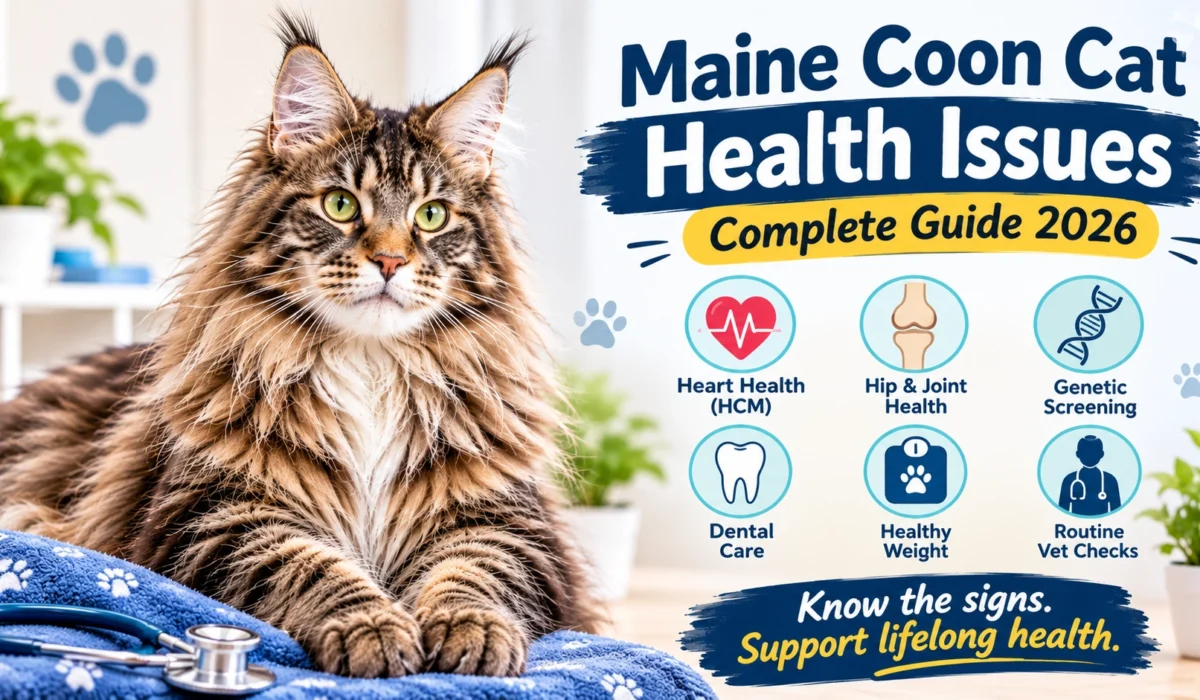
Although Maine Coons are generally considered a robust breed, they can be predisposed to certain inherited health conditions. Understanding Maine Coon cat health issues can help owners recognize early warning signs, make informed decisions when choosing a kitten, and provide better long-term care.
Some health conditions affect the heart, joints, muscles, or red blood cells. Others, such as dental disease and obesity, can affect cats of any breed.
The good news is that responsible breeding, appropriate genetic screening, routine veterinary examinations, and good daily care can make a meaningful difference.
This guide explains the most important Maine Coon health problems to understand, their symptoms, available screening methods, and how to keep your cat healthy throughout its life.
Are Maine Coon Cats Prone to Health Problems?
Maine Coons are not automatically unhealthy cats. However, like other pedigree breeds, they have certain inherited conditions that owners and breeders should understand.
The main breed-associated health concerns include:
- Hypertrophic cardiomyopathy (HCM)
- Hip dysplasia
- Spinal muscular atrophy (SMA)
- Pyruvate kinase deficiency (PKDef)
- Patellar luxation
These conditions do not affect every Maine Coon. Some cats may never develop any of them, while others may need regular monitoring or long-term veterinary care.
The International Cat Association (TICA) recommends responsible breeding practices that include appropriate health testing for conditions such as HCM and joint disorders.
Understanding these risks is the first step toward managing Maine Coon cat health issues responsibly.
1. Hypertrophic Cardiomyopathy (HCM)
Hypertrophic cardiomyopathy (HCM) is one of the most important heart-related health concerns in Maine Coons.
It occurs when the muscular walls of the heart become abnormally thick. This can make it harder for the heart to relax and fill with blood normally.
In some cats, HCM progresses slowly. Others may develop serious complications.
Common HCM warning signs
Some cats show no obvious symptoms during the early stages. When signs appear, they may include:
- Rapid or difficult breathing.
- Reduced activity or exercise tolerance.
- Unusual tiredness.
- Reduced appetite.
- Weakness or collapse.
- Sudden pain or weakness in the hind legs.
A serious complication is a blood clot that blocks circulation to the back legs. This can cause sudden pain and paralysis and requires emergency veterinary attention.
How is HCM diagnosed?
A veterinarian may listen to your cat’s heart and recommend further testing. Echocardiography, which uses ultrasound to examine the heart, is the gold-standard diagnostic test.
A genetic test is also available for the known Maine Coon HCM-associated MYBPC3-A31P mutation. However, a negative result does not guarantee that a cat will never develop HCM because other genetic and non-genetic causes exist.
TICA recommends combining genetic testing with periodic echocardiographic evaluations by a board-certified veterinary cardiologist when assessing breeding cats.
What owners should do: Ask about family history and appropriate cardiac screening. Discuss heart examinations with your veterinarian, even when your cat appears healthy.
2. Hip Dysplasia
Hip dysplasia is another important common Maine Coon health problem. It occurs when the ball and socket of the hip joint do not fit together properly. This can lead to abnormal movement, discomfort, joint damage, and eventually arthritis.
Because Maine Coons have large bodies, joint health deserves particular attention.
Symptoms of hip dysplasia in Maine Coons
Watch for:
- Limping or stiffness.
- Reluctance to jump onto furniture.
- Difficulty climbing stairs.
- Reduced interest in play.
- Unusual walking movements.
- Discomfort when the hips are touched.
- Excessive licking around the hip area.
Some cats gradually adjust their movements, making the problem difficult to notice at first.
Diagnosis and treatment
Veterinarians typically use physical examinations and X-rays to assess hip structure.
Treatment depends on the severity of the condition. It may include:
- Maintaining a healthy body weight.
- Appropriate exercise.
- Veterinary-prescribed pain management.
- Joint-support strategies.
- Surgery in selected severe cases.
Do not give human painkillers to your cat. Some common human medications are extremely toxic to cats.
3. Spinal Muscular Atrophy (SMA)
Spinal muscular atrophy is an inherited neurological condition associated with Maine Coons.
It affects motor neurons that control muscles. As these nerve cells are damaged, muscles in the hind legs and body gradually become weak.
Signs of SMA in Maine Coon kittens
According to the University of California, Davis Veterinary Genetics Laboratory, affected kittens often begin showing signs at approximately three to four months of age.
Symptoms may include:
- Unsteady walking.
- Weakness in the hind legs.
- Reduced muscle mass.
- Difficulty jumping.
- An unusual swaying movement.
- Poor coordination when landing.
SMA in Maine Coons is inherited as an autosomal recessive condition. A kitten needs two copies of the relevant mutation to be affected.
Can SMA be prevented?
Genetic testing can identify affected cats and carriers. When two carrier cats are bred together, each kitten has a 25% probability of inheriting two copies of the mutation and being affected.
Responsible breeding decisions can therefore reduce the risk of producing affected kittens.
4. Pyruvate Kinase Deficiency (PKDef)
Pyruvate kinase deficiency is an inherited blood disorder that can affect Maine Coons. The condition reduces the ability of red blood cells to function normally. This can result in hemolytic anemia, meaning red blood cells break down faster than they should.
Signs of PKDef
Symptoms can vary and may appear intermittently.
Possible warning signs include:
- Weakness.
- Unusual tiredness.
- Reduced activity.
- Weight loss.
- Pale gums.
- Yellowing of the skin or eyes.
- Enlarged abdomen.
Some affected cats may initially appear healthy.
How is PKDef managed?
A veterinarian may recommend blood testing and genetic testing to investigate the condition. There is no single treatment plan for every affected cat. Management depends on the severity of anemia and the individual cat’s condition.
For breeders, genetic screening is particularly useful because it helps identify carriers and prevent carrier-to-carrier matings.
5. Patellar Luxation
Patellar luxation is a condition in which the kneecap moves out of its normal position. It can affect cats and may contribute to abnormal movement or lameness.
Although it is not exclusive to Maine Coons, TICA identifies joint disorders as an important consideration in this large breed.
Common signs
A cat with patellar luxation may:
- Suddenly lift one hind leg while walking.
- Show an unusual skipping movement.
- Limp intermittently.
- Avoid jumping.
- Appear uncomfortable during activity.
Some cases are mild, while more serious cases may require surgical treatment. A veterinarian can assess the knee through a physical examination and imaging when necessary.
Other Maine Coon Cat Health Issues to Monitor
Not every health problem experienced by a Maine Coon is inherited or specific to the breed. Some conditions are common across the wider cat population and deserve attention as part of everyday care.
Dental Disease
Dental disease can cause painful gums, damaged teeth, bad breath, and difficulty eating.
Cornell University College of Veterinary Medicine reports that studies have found some form of dental disease in approximately 50% to 90% of cats older than four years.
Watch for:
- Bad breath.
- Red or swollen gums.
- Drooling.
- Difficulty chewing.
- Dropping food while eating.
- Reduced appetite.
Regular dental examinations and gradual introduction to tooth brushing can help support oral health. Use toothpaste made specifically for cats. Human toothpaste is not appropriate.
Obesity
Maine Coons are naturally large, but that does not mean extra body fat is healthy. Excess weight can put additional pressure on joints and may contribute to reduced mobility and other medical problems.
Maintain a balanced feeding routine and encourage regular play. Ask your veterinarian to assess your cat’s body condition rather than judging its weight by appearance alone.
Kidney and Urinary Health
Kidney disease and urinary problems can affect cats of any breed. Pay attention to changes in thirst, urination, appetite, and weight.
Persistent vomiting, increased drinking, frequent urination, or difficulty passing urine should never be ignored.
A cat that repeatedly attempts to urinate but produces little or no urine needs emergency veterinary care.
Warning Signs to Watch For in Maine Coons
Recognizing changes early can help prevent health conditions from becoming more serious.
Here is a practical monitoring checklist:
| Warning sign | Possible concern |
| Difficulty breathing | Heart or respiratory problem |
| Sudden hind-leg weakness | Possible blood clot or neurological issue |
| Limping or reluctance to jump | Joint or muscle problem |
| Pale gums and weakness | Possible anemia |
| Bad breath and reduced appetite | Dental disease |
| Increased thirst and urination | Kidney or metabolic issue |
| Unsteady walking in a kitten | Possible neurological concern |
| Rapid weight gain | Obesity or another medical issue |
These signs do not confirm a diagnosis. However, they are reasons to contact your veterinarian.
Emergency warning: Open-mouth breathing, severe breathing difficulty, collapse, or sudden painful paralysis of the hind legs require immediate veterinary attention.
How to Prevent Maine Coon Cat Health Issues?
You cannot prevent every inherited condition, but you can take practical steps to support your cat’s health.
1. Choose a Reputable Breeder
Before bringing home a Maine Coon kitten, ask about the health history of both parents.
Reputable breeders should be prepared to discuss:
- HCM genetic testing.
- Periodic cardiac echocardiograms.
- Hip screening where appropriate.
- SMA genetic testing.
- PKDef genetic testing.
- Veterinary examinations and kitten health records.
Do not assume that a single negative genetic test guarantees a completely healthy kitten.
2. Schedule Regular Veterinary Examinations
Routine examinations allow veterinarians to assess your cat’s heart, joints, teeth, weight, and overall condition.
At least annual examinations are recommended for adult cats, although kittens, senior cats, and cats with existing conditions may need more frequent visits.
Discuss an appropriate monitoring schedule for your Maine Coon’s age and family history.
3. Maintain a Healthy Diet
Provide complete and balanced cat food appropriate for your cat’s life stage.
A good feeding routine should support:
- Healthy muscle development.
- Appropriate body weight.
- Normal digestion.
- Skin and coat condition.
- Overall health.
Avoid giving excessive treats or changing food frequently without a good reason.
4. Encourage Daily Exercise
Maine Coons are playful and intelligent cats. Interactive toys, climbing structures, scratching posts, and puzzle feeders can encourage movement and mental stimulation.
Regular activity helps maintain muscle strength and supports healthy body weight.
5. Maintain Grooming and Dental Care
Regular brushing helps prevent mats and allows you to notice changes in your cat’s skin and coat. Dental care should also be part of the routine.
For more practical advice, read our Maine Coon grooming, feeding, and health care guide.
How Bella Dolce Maine Coon Supports Responsible Ownership?
Choosing a Maine Coon is a long-term commitment. Understanding the breed’s health considerations before bringing home a kitten is an important part of responsible ownership.
At Bella Dolce Maine Coon, we encourage prospective owners to learn about the breed’s nutritional, grooming, socialization, and veterinary care requirements.
Families considering a kitten can explore our Maine Coon kittens page and learn more about the cats in our breeding program through Our Cats.
Before making a decision, ask questions about health screening, parental history, veterinary records, and the support available after adoption.
For first-time owners, our complete Maine Coon kitten care guide explains how to prepare your home and establish healthy daily routines.
Final Thoughts
Understanding Maine Coon cat health issues is an important part of responsible ownership. Conditions such as HCM, hip dysplasia, SMA, and PKDef deserve particular attention because of their inherited associations with the breed.
However, being a Maine Coon does not mean your cat will automatically develop these problems.
Responsible breeding, appropriate health screening, balanced nutrition, regular exercise, dental care, and routine veterinary examinations all contribute to better long-term health.
The most important takeaway is simple: learn your cat’s normal behavior and watch for changes. Early attention to unusual symptoms can help your veterinarian identify problems and recommend the right care.
With informed decisions and consistent attention, you can give your Maine Coon the best possible opportunity for a comfortable and healthy life.
FAQ
What is the most common health problem in Maine Coon cats?
Hypertrophic cardiomyopathy (HCM) is one of the most important inherited health concerns associated with Maine Coons. It causes thickening of the heart muscle and may remain undetected until it progresses. Cardiac screening and appropriate veterinary monitoring are important.
Do Maine Coons have joint problems?
Maine Coons may be susceptible to hip dysplasia and other joint disorders. Signs include limping, stiffness, reluctance to jump, and reduced activity. Veterinary examinations and X-rays can help identify joint problems.
How long do Maine Coon cats live?
Lifespan varies between individual cats. Genetics, nutrition, preventive care, environment, and existing medical conditions can all influence longevity. Responsible breeding and regular veterinary care can support a healthy life, but no breeder can guarantee a particular lifespan.
How can I tell if my Maine Coon has a genetic disease?
Some inherited conditions have available genetic tests, including the known Maine Coon HCM-associated mutation, SMA, and PKDef. However, genetic tests do not detect every possible disease. Your veterinarian can recommend appropriate testing and examinations based on your cat’s history and symptoms.
Medical note: This article is educational and does not replace an examination or individualized advice from a licensed veterinarian.
Also Read: Half Breed Maine Coon