

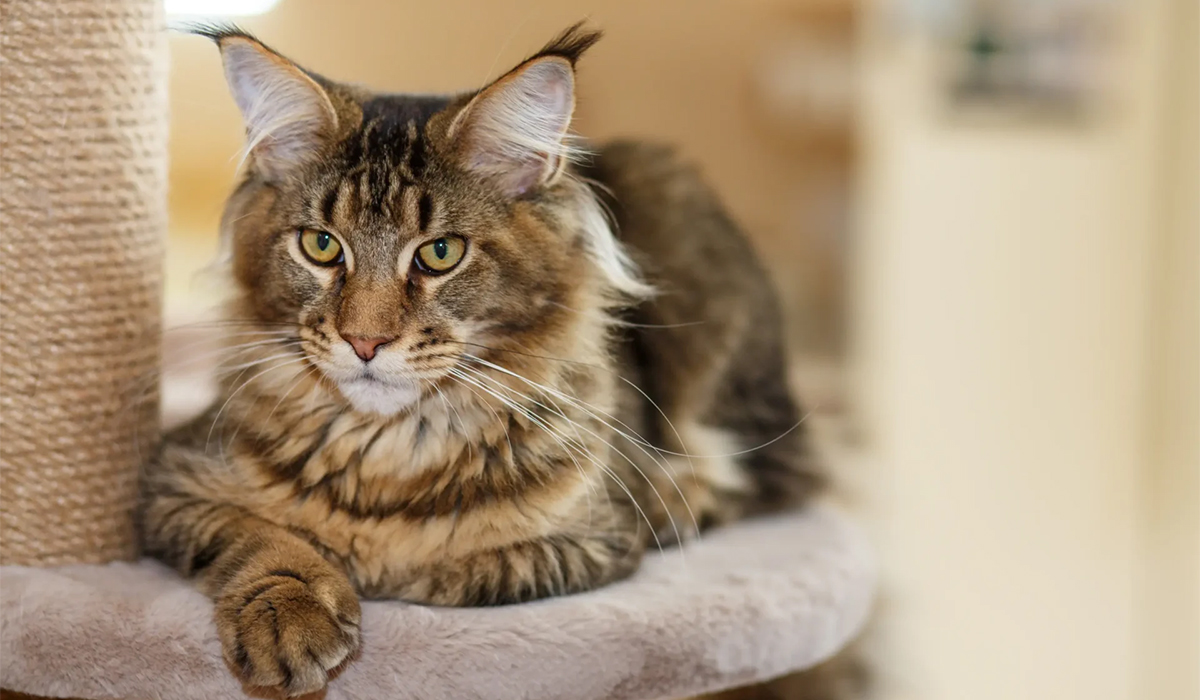
Maine Coon FAQs : 10 Common Questions About the Breed
Maine Coons are hard to miss. They’re big, they’ve got that long flowing coat and those tufted ears, and they tend to act less like aloof cats and more like a dog who’s decided to follow you from room to room. It’s easy to see why people fall for them.
But falling for the look and knowing what you’re signing up for are two different things. Most people weighing up a Maine Coon have the same handful of practical questions: how big do they really get, how much grooming is this going to be, are they good with kids, can a first-timer handle one. This guide works through those, honestly, so you can decide whether the breed actually fits your household.
Quick Answers
If you’re just scanning, here’s the short version:
| Question | Short answer |
| Are Maine Coons hypoallergenic? | No — no cat truly is. |
| How big do they get? | Among the largest domestic breeds, though it varies a lot. |
| What are they like? | Social, smart, playful, and affectionate. |
| Good with kids? | Often, yes — with respectful, supervised handling. |
| Good with other pets? | Frequently, but it depends on the animals and the introduction. |
| Do they shed? | Yes. The long coat needs regular brushing. |
| How much grooming? | Usually a few brushings a week. |
| Easy to care for? | Manageable if you’re prepared for the coat and the size. |
| Slow to mature? | Very — often three to five years to fill out. |
| Okay for first-time owners? | Yes, as long as you know what the coat and size ask of you. |
The rest of the article unpacks each of these.
Are Maine Coons Hypoallergenic?
No. Maine Coons aren’t a hypoallergenic breed, and honestly, no cat that label gets thrown around, but there’s no cat you can guarantee won’t set off an allergy.
The thing most people get wrong is blaming the fur. Cat allergies are mostly a reaction to proteins the cat produces in saliva, skin, and dander not to hair length itself. A long-coated cat like a Coon does carry and spread that dander around the house, so the coat is part of the picture, but the fur isn’t the root cause the way people assume.
Regular grooming and keeping the house clean can take the edge off by cutting down loose hair and dander, but neither will make the problem disappear. If someone in your home reacts to cats, the only sensible move is to spend real time around Maine Coons before you commit. Reactions vary wildly from person to person, and even from one cat to the next.
How Big Do Maine Coons Get?
They’re genuinely large among the biggest domestic cats you’ll meet but there’s a huge range, and the internet’s record-breaking Coons give people unrealistic expectations. Males usually outsize females, and any two cats can differ in length, weight, bone, and overall build.
A more useful thing to track than a target number on the scale is body condition whether your cat is lean and solid rather than heavy. And remember they take their time getting there. A Coon can keep developing for years after a normal kitten would have finished growing, so don’t panic if yours looks lanky and half-finished at a year old.
One point worth repeating because it trips people up: a big Maine Coon and a fat Maine Coon are not the same thing. Overfeeding a kitten to force it to grow larger isn’t “helping it grow” it’s just putting weight on a growing frame that its joints and heart will pay for later. Let the size come on its own, and let your vet help you keep an eye on how growth and condition are tracking.
What’s a Maine Coon’s Personality Like?
The usual words are social, smart, curious, playful, affectionate and for most Coons they fit. A lot of them like being involved: sitting in on whatever you’re doing, supervising the cooking, parking themselves nearby without necessarily demanding to be held every second.
That said, personality varies more than the breed’s reputation lets on. You’ll meet outgoing, into-everything Coons and you’ll meet quiet, watch-from-the-shelf Coons. Plenty are chatty, too Coons are known for a range of trills, chirps, and drawn-out conversations that they’ll happily aim at you.
Temperament comes down to the individual cat as much as the breed: genetics, how they were raised, early socialization, and their environment all shape who a cat becomes. Treat “Maine Coons are friendly” as a general tendency, not a promise stamped on every kitten.
Are Maine Coons Good With Children?
Many do well in family homes, kids included. Their sociable, playful streak makes them fun companions for children but a good relationship isn’t automatic. It rests on the kids learning how to treat a cat.
That means teaching children to approach calmly, keep their hands off tails and fur, not chase the cat, and leave it alone while it’s eating or sleeping. The big one is respecting the cat’s exit: when it walks away, it gets to walk away. Kittens especially need gentle, careful handling, and young children should always be supervised around any cat.
And don’t lean on the breed’s easygoing reputation as a reason to let a cat be manhandled. A friendly temperament isn’t a license for a toddler to pull ears; no cat should be expected to just absorb that.
Do Maine Coons Get Along With Other Cats and Dogs?
Often, yes. Coons live happily alongside other cats and, in a lot of homes, dogs too. But “often” isn’t “always,” and no cat is obliged to like the resident pets on day one.
Whether it works depends on the animals themselves, their temperaments, their history with other pets, their ages, and how much energy is already bouncing around the house and, more than anything, on how you handle the introduction. Rushing it is the classic mistake.
Go slow. Give each animal a safe spot to retreat to, and let them get used to each other’s scent and presence through a door before they ever meet face to face. Don’t force interactions. The goal isn’t to manufacture instant best friends; it’s a calm, gradual introduction that gives everyone time to relax. Done patiently, most introductions land fine.
Do Maine Coons Shed a Lot?
Yes they shed, and that long coat needs upkeep. How much varies from cat to cat, and most Coons blow their coats harder during the seasonal sheds in spring and fall.
Regular brushing is your best tool here. It pulls loose hair out of the coat before it ends up on your sofa, and it lets you catch tangles while they’re still small and easy, long before they turn into mats. Staying on top of it a few times a week is far less work than facing down a heavily knotted coat later.
For the full routine, see our Maine Coon grooming and health care guide.
How Much Grooming Does a Maine Coon Need?
A few brushes a week suits most Coons, though the right pace really depends on your cat’s particular coat some knot up far faster than others. Give extra attention to the spots that tangle first: behind the ears, around the neck, under the chin, the belly, behind the back legs, and around the tail.
If you’ve got a kitten, start now and keep it light, short, positive sessions that get them comfortable with the brush, with having their paws handled, and with being fussed over in general. That early investment makes grooming a full-grown Coon dramatically easier.
If a serious mat does form, don’t fight it by yanking. A groomer or your vet can deal with it safely depending on how bad it’s gotten. And it’s worth remembering that brushing isn’t just cosmetic with your hands in the coat regularly, you’ll notice skin problems, ear issues, or changes in condition that you’d otherwise miss.
Are Maine Coons Easy to Care For?
They’re not a difficult breed, exactly but they’re not a low-effort one either, and it’s better to know that going in. The coat needs regular grooming, and their size and playfulness mean they do best with the right gear: sturdy scratchers, things to climb, and enough enrichment to keep a clever, active cat occupied.
Beyond that, the basics are the same as any cat done properly: good food and fresh water, routine grooming, vet care, dental care, a clean litter box, exercise and play, mental stimulation, and comfortable places to rest. Kittens need a bit more hands-on attention while they’re growing into all of it.
If you’re gearing up for a kitten specifically, our guide to raising a Maine Coon kitten goes deep on nutrition, grooming, socialization, training, and early development.
How Long Do Maine Coons Take to Mature?
Slowly that’s part of the breed’s charm and occasionally part of its frustration. A Coon often keeps changing for years, its body, coat, and overall size still developing well past the point a typical cat would have settled.
There’s no clean timeline that fits every cat, since genetics, nutrition, health, and sex all play into it. What you shouldn’t do is try to speed it up. You can’t rush a Coon to full size, and attempting to just risks overfeeding. Give them solid nutrition, vet care, exercise, rest, and a safe place to grow up, and let the clock do its thing. Regular checkups are the easiest way to confirm growth and condition are on a healthy track.
Are Maine Coons Good for First-Time Owners?
There can be plenty of people’s first cat is a Coon and it goes great as long as you walk in clear-eyed about a large, long-haired breed’s demands.
Before you commit, be honest with yourself about whether you’re up for regular coat grooming, feeding well, keeping the litter area clean, staying on top of vet care, playing with the cat properly, giving it things to scratch and climb, socializing and training with patience, and the big one a commitment that runs well over a decade.
A Maine Coon isn’t just a jumbo shorthair. The coat, the size, the enrichment needs, and the long, gradual growth all deserve real thought upfront. Weigh those honestly, prepare a little, and most first-time owners find a Coon to be one of the most affectionate, rewarding cats they could have picked.
Do Maine Coons Need a Lot of Exercise?
They’re active and endlessly curious, so yes they want regular play and a stimulating environment, even if they don’t need anything strenuous. What they need is outlets: room to move, explore, climb, scratch, and chase.
Interactive toys, scratching posts, a good tall cat tree, safe climbing spots, puzzle feeders, and short bursts of play with you all do the job. Toys that let them stalk and chase tend to land best, since they scratch the hunting itch.
And don’t underestimate the mental side. Coons are smart, and a bored smart cat finds its own entertainment, usually the kind you’d rather it didn’t. Rotate the toys and mix up the activities now and then to keep things interesting.
Are Maine Coons Intelligent and Easy to Train?
They’re bright and tuned in to their people, which makes them more trainable than the average cat. Lots of Coons learn the household routine, come to their name, use a scratching post reliably, and settle into carriers and grooming provided you introduce all of it as a good experience rather than a fight.
Keep training built on rewards, not punishment; fear teaches a cat to avoid you, not to cooperate. With kittens, the “training” that matters most is really just getting them comfortable early with handling, grooming, carriers, and appropriate play. Those small habits pay off for life. Our Maine Coon kitten training guide has more practical steps.
Do Maine Coons Have Special Health Needs?
Like any purebred, Coons have a few conditions the breed is watched for, which is exactly why steady vet care matters. The right mindset is preventive: don’t assume every Coon is doomed to a particular illness, but do keep up with the checkups that catch problems early.
Routine visits let your vet keep tabs on weight and body condition, dental health, general physical shape, vaccinations, parasite prevention, mobility, and any behavior changes.
The condition prospective owners hear about most is hypertrophic cardiomyopathy (HCM), a thickening of the heart muscle that the breed is screened for. It’s worth understanding — but understanding isn’t diagnosing, and you can’t work this out from a webpage. If you’re worried about your cat’s heart, or you notice real changes in energy, breathing, appetite, or behavior, that’s a vet visit. Our dedicated piece on Maine Coon cardiac health covers it in more depth.
Conclusion
What makes a Maine Coon special isn’t only the size and the coat, it’s the mix of that striking look with a sociable, clever, slow-to-grow personality. Before you bring one home, the real question is whether your household can give it what the breed needs: the grooming, the good food, the enrichment, the vet care, the space, and the long-haul commitment.
Just don’t expect every Coon to be a carbon copy. Individual temperament, upbringing, environment, and genetics all shape the cat you end up with, and part of the fun is meeting the one that’s actually yours.
If you’re getting close to welcoming one in, start by getting the everyday basics ready and building a safe, comfortable space for them. You can meet our available Maine Coon kittens and get to know the cats at Bella Dolce Maine Coons. A well-prepared owner is in the best position to give a Coon a good life from day one.
FAQ
Do Maine Coons need special food?
Not automatically, just because they’re big. They need a nutritionally complete food matched to their life stage and individual needs your vet can tailor that if there’s a health issue in play.
Do Maine Coons like water?
Some do, some couldn’t care less. The breed has a reputation for water-obsessed cats, but there’s no guarantee yours will be the one splashing in the sink.
Are Maine Coons indoor cats?
They live very comfortably indoors when they’ve got enough to climb, scratch, chase, and do. If you allow outdoor access, weigh the safety risks and pick an approach that suits where you live.
Do Maine Coons need a big litter box?
Yes, size the box to the cat. A Coon needs room to get in, turn around, dig, and go without feeling cramped. Too small a box just makes the whole thing less appealing to use.
Are Maine Coons affectionate?
Many are famously so, but it’s individual. Some want to be glued to your lap; others show their affection by staying close by on their own terms.
Also Read: Healthy Maine Coon Kittens for Sale in Washington State